What Are the Different Types of Gallon Bottles?
Meta description: “Discover the multitude of gallon bottles available and uncover the ideal choice for your needs—are you ready to explore the options?

Gallon bottles come in various materials like HDPE, PET, glass, and aluminum, catering to different needs. You’ll find round jugs for ease of use, square shapes for efficient storage, and F-style bottles for chemicals. Common applications include beverages, food, and industrial liquids. The size variations range from standard US gallons to half-gallon and specialty sizes. You’ll also encounter different closures, like screw caps and child-resistant lids. For a thorough look at your options, explore further.
Gallon bottles come in various designs and materials, each tailored for specific uses and industries. The most commonly used material for these bottles is high-density polyethylene (HDPE), known for its durability and chemical resistance. This makes it a top choice for many applications, particularly in the food and beverage sectors. Additionally, gallon jugs made of HDPE are versatile for various liquid storage needs.
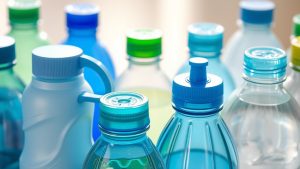
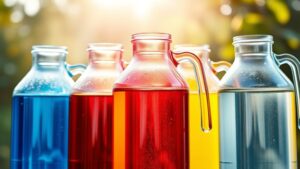
When you need clear gallon bottles, polyethylene terephthalate (PET) is your go-to option, particularly for beverages like water and soft drinks. For premium products, glass gallon bottles offer inertness and recyclability, while polypropylene (PP) and polyvinyl chloride (PVC) cater to specific industrial needs with less frequency. Although rarer, aluminum and stainless steel also serve niche markets requiring specialized gallon containers.
When it comes to shapes, round jugs dominate the landscape due to their ease of stacking and handling. You’ll often see square or rectangular gallon bottles that maximize space efficiency, making them ideal for storage and shipping. F-style bottles, characterized by their oblong shape and straight handle, are common when dealing with chemicals and other industrial liquids. For larger quantities, carboys—cylindrical bottles with a narrow neck—are used for transporting water, wine, or laboratory liquids.
There’s also room for specialty shapes and designs that cater to branding needs or specific product functionalities.
Gallon bottles serve a variety of everyday uses. You might find them in beverage storage for water, juice, and soft drinks, or containing oils, syrups, and condiments in the food industry. They’re essential for chemical and industrial liquid storage, housing cleaning agents, solvents, and laboratory reagents.
In healthcare and pharmaceuticals, gallon bottles hold bulk liquids or solutions, while household applications often include detergents and soaps. Depending on the liquid type, different closure types are employed for these bottles. Screw caps are the most prevalent, providing a secure seal for liquids. You might prefer flip-top lids for convenience or spouts for easy liquid dispensing. Specialized closures, like child-resistant caps and tamper-evident seals, are essential for pharmaceutical and chemical products.
Sizes vary, too. The standard US gallon bottle holds 128 fluid ounces (3.785 liters), while an Imperial gallon holds 160 fluid ounces (4.546 liters), which you’ll see in the UK and Commonwealth countries. For smaller volumes, half-gallon (64 fluid ounces) and quarter-gallon (32 fluid ounces) options exist. Specialty sizes, including 2.5-gallon and 5-gallon containers, are designed for bulk storage.
Different industries specify their gallon bottle needs distinctly. The beverage industry often opts for clear PET and HDPE bottles, while the food industry looks toward HDPE and glass. In the chemical sector, HDPE and PP are standards for hazardous liquids. Pharmaceutical applications favor HDPE and glass gallon bottles, and laboratory settings utilize carboys and other specialty bottles.
When choosing a gallon bottle, consider not just the material and design, but also the compliance with environmental and regulatory requirements, such as recyclability and FDA standards for safe usage.
Conclusion
In a world where “bigger is better,” it’s amusing how a simple gallon bottle can come in various forms, each tailored for a specific need. Whether you’re hauling water, storing chemicals, or indulging in homemade beverages, you’ve got choices. Isn’t it ironic that, despite our preferences for customization, we often overlook the humble gallon? So the next time you reach for a bottle, remember—it’s not just a container; it’s a reflection of your unique requirements.