7 Essential CO2 Canister Sizes Every Homeowner Should Know About
Just what CO2 canister size is right for your home beverage system? Discover the essential options and find the perfect fit for your needs!
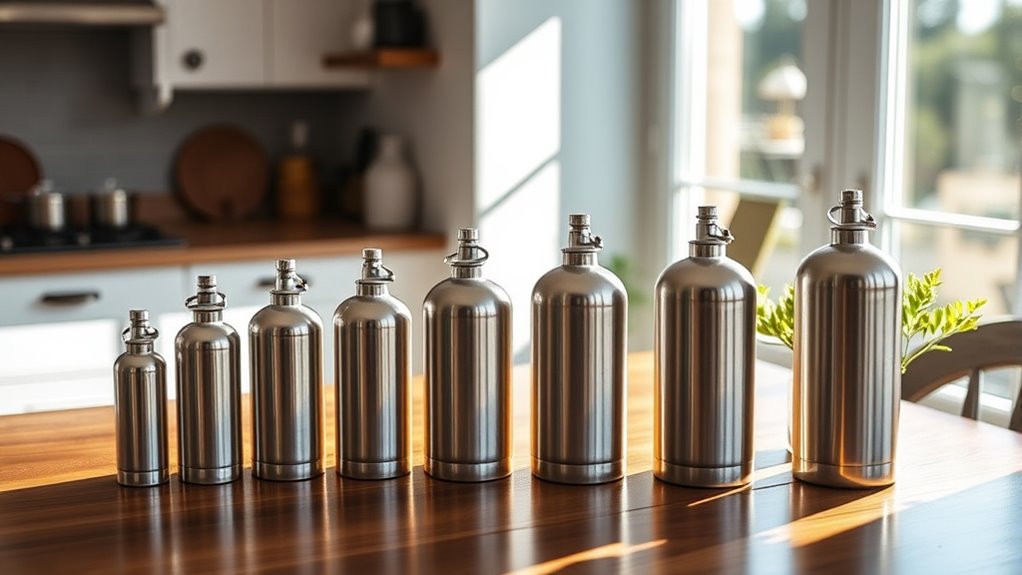
When managing CO2 for home beverage dispensing, knowing the essential canister sizes is key. You’ll encounter small portable cylinders (2.5 to 5 lbs) for easy transport, entry-level home canisters (10 lbs) for beginners, mid-range standard cylinders (20 lbs) for diverse applications, and high-capacity options (30 to 50 lbs) for heavy use. For industrial needs, consider 100 lbs or larger. Choosing the right size matters—stick around for insight into selecting the perfect canister for your needs!
Small Portable Cylinders (2.5 Lb to 5 Lb)
When you’re looking for a practical solution for your CO2 needs, small portable cylinders, typically ranging from 2.5 to 5 pounds, are an excellent choice.
These lightweight aluminum cylinders, measuring about 4.4 inches in diameter and varying in height from 10.3 to 14.75 inches, are designed for mobility and compact storage. Weighing just around 3.3 pounds when empty, they’re easy to transport, making them perfect for various applications—think beverage carbonation, aquaculture, and light industrial tasks. Additionally, they provide a consistent TARE weight between cylinders, ensuring reliable usage across different applications.
With a service pressure of 1800 PSI and a test pressure of 3000 PSI, these cylinders offer safety and reliability. Plus, they’re corrosion-resistant, ensuring they’ll hold up in diverse conditions without rusting like steel alternatives.
Entry-Level Home Canisters (10 Lb)
Entry-level home canisters, typically coming in at 10 pounds, are an ideal choice for those looking to plunge into CO2 usage without a hefty commitment.
These canisters usually measure between 18 to 22 inches in height and 5.25 to 7 inches in diameter, making them compact enough for easy storage or transport. With a service pressure rating of 1800 PSI, you can confidently use them for tasks like beverage carbonation and home brewing, dispensing 10 to 14 half-barrel kegs per fill. Made from high-strength aluminum, they resist rust and corrosion, ensuring durability. Just remember, they require DOT and Transport Canada certification, and hydro testing every five years to keep everything safe and compliant for your home applications. Additionally, carbon dioxide assists in food preservation by chilling and freezing, which is an added benefit for home users who enjoy culinary experimentation.
Mid-Range Standard Cylinders (20 Lb)
For homeowners looking to expand their CO2 usage, mid-range standard cylinders—often weighing 20 pounds—offer a perfect blend of capacity and manageability.
These cylinders are ideal for various applications, from homebrewing to beverage dispensing, striking a balance between portability and output.
Here are key features to evaluate:
- Dimensions: Typically 25.5 to 28 inches in height and 5 to 8 inches in diameter.
- Capacity: Contains about 5 to 6 pounds of liquid CO2, dispensing up to 100 gallons of beverages.
- Materials: Available in corrosion-resistant steel or lightweight aluminum, each with unique advantages.
- Maintenance: Requires hydrostatic testing every 5 years and regular inspections to guarantee safety and functionality.
High-Capacity Home Systems (30 Lb to 50 Lb)
High-capacity home systems typically utilize 30 lb to 50 lb CO2 cylinders, making them ideal for anyone needing a robust solution for high-demand applications.
These larger cylinders are perfect for beverage systems, hydroponics, and large aquariums, allowing extended use between refills.
Larger cylinders offer ideal solutions for beverage systems, hydroponics, and large aquariums, enabling longer intervals between refills.
A 30 lb cylinder stands around 34-36 inches tall, while a 50 lb cylinder can reach up to 57 inches, guaranteeing you have a solid source of CO2.
Confirm secure, upright storage due to their weight and pressure—especially since a 50 lb steel cylinder weighs about 126 lbs empty.
Standard CGA320 valves ensure compatibility with most regulators, while safe transport is assured by DOT/TC approvals.
Always check fittings before use to maintain safety.
Industrial and Bulk Storage (100 Lb and Larger)
When your needs extend beyond high-capacity home systems, industrial and bulk storage solutions for CO2 come into play.
These larger tanks—100 lbs and up—are key for high-demand environments. Here are a few options:
- 100 lb Tanks: Standard for large-scale beverage dispensing, handling 50–70 kegs.
- Bulk Options: Ranging from 6 to 50 tons, ideal for industrial applications.
- Durable Construction: Made from high-grade stainless steel for long-lasting use.
- High-flow Configurations: Available for demanding environments, with capacities up to 1,000 lbs.
These solutions minimize downtime and maximize efficiency, making them essential for venues like stadiums, microbreweries, and restaurants with high CO2 needs.
Selection Criteria for Choosing the Right Size
Choosing the right size CO2 canister hinges on several important criteria that can make or break your setup.
First, assess your storage space—the compact 5-pound cylinder fits in tight areas, while the larger 20-pound tank requires dedicated vertical space.
Evaluate your storage options; a compact 5-pound cylinder is ideal for tight spaces, whereas a 20-pound tank needs more vertical room.
Next, consider how often you’ll use it; frequent carbonation needs a smaller tank, but high-volume applications, like restaurants, benefit from a larger one to minimize refills.
Portability matters too; lightweight aluminum tanks are easier to transport than heavier steel ones.
Finally, factor in your budget; smaller tanks are cheaper upfront, but larger ones offer better long-term cost efficiency.
Balancing these elements guarantees you’ll choose the ideal canister size for your specific needs.
Usage Considerations for CO2 Canisters
Understanding how often you’ll use your CO2 canister is essential for effective home carbonation. Choosing the right size based on your usage helps you avoid waste and inconvenience. Here are key considerations:
- Usage Frequency: If you carbonate drinks daily, a larger canister (600 grams) is ideal.
- Household Size: Larger families or frequent entertainers should opt for bigger sizes to keep up with demand.
- Machine Compatibility: Most home soda machines work best with 60-gram or 410-gram canisters, so check specifications.
- Portability: For occasional use or travel, smaller 16-gram canisters are more convenient.
Conclusion
In conclusion, knowing the right CO2 canister size for your needs is essential for efficiency and safety in your home. For instance, if you’re an avid homebrewer, a 20 lb canister might be ideal, as it strikes the perfect balance between portability and capacity. By selecting the appropriate size, you’ll guarantee you have enough CO2 for your projects without overloading your storage space. So, assess your usage and choose wisely to enhance your home experience!