What Is SUS 304 and Its Importance in Manufacturing?
Join us as we explore the significance of SUS 304 in manufacturing and uncover why it stands out among other materials.
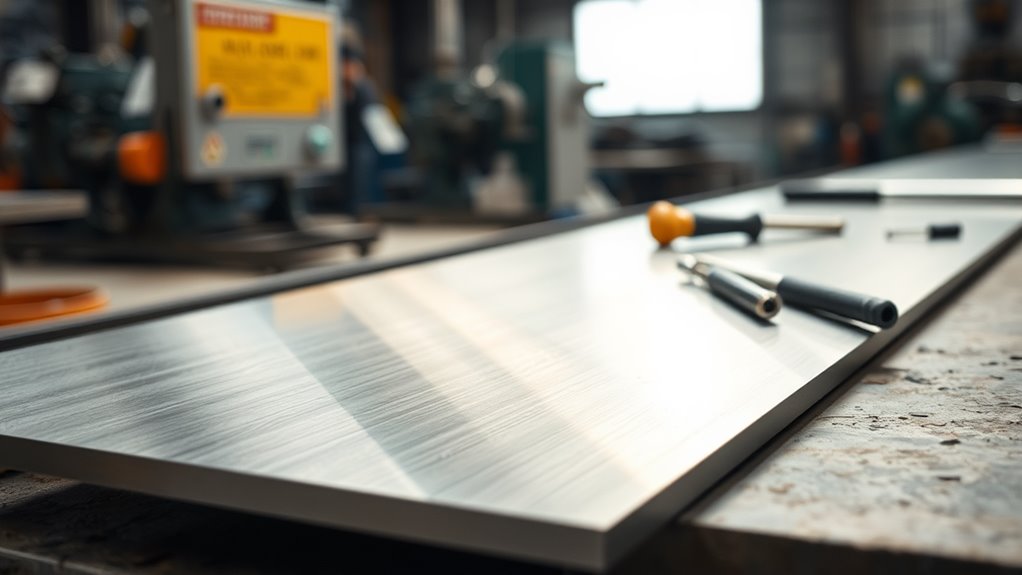
SUS 304 is a versatile austenitic stainless steel, containing 18-20% chromium and 8-10.5% nickel. Its exceptional corrosion resistance and mechanical properties make it essential for manufacturing in industries like food processing, pharmaceuticals, and construction. The material's excellent weldability and formability allow for complex designs, while its recyclability enhances its environmental appeal. Understanding its unique qualities and applications could provide valuable insights into its role in modern manufacturing and its advantages over other materials.
When you consider materials essential for modern manufacturing, SUS 304 stands out due to its impressive balance of strength, corrosion resistance, and versatility. Defined primarily by its chemical composition, SUS 304 contains 18-20% chromium and 8-10.5% nickel while maintaining low levels of carbon, manganese, phosphorus, and sulfur. This composition grants it remarkable stability and durability, making it suitable for a wide array of applications.
In its annealed state, SUS 304 exhibits non-magnetic properties, though mechanical treatment can induce magnetism, a characteristic that can impact its use in specific environments.
The high corrosion resistance of SUS 304 is one of its most significant attributes, making it ideal for industries like food processing and pharmaceuticals, where hygiene and non-reactivity are essential. Its ability to resist various corrosive environments allows it to thrive in chemical and food industries, where equipment must endure harsh conditions. Additionally, the addition of chromium enhances its corrosion resistance, making it particularly valuable in environments prone to corrosion.
SUS 304's exceptional corrosion resistance makes it an ideal choice for food processing and pharmaceutical applications, ensuring hygiene and durability.
The ease of fabrication further enhances its appeal; SUS 304's excellent weldability and formability enable the creation of complex designs that meet diverse manufacturing needs.
SUS 304 comes in several variants, including 304L and 304H, which differ primarily in carbon content. This variety allows you to select the appropriate type based on specific mechanical and thermal requirements. The tensile strength of SUS 304 is around 515 MPa (74,700 psi), with a yield strength of about 205 MPa (29,700 psi). These properties indicate a medium to high strength material that balances hardness and ductility, making it suitable for various structural applications.
In addition to its mechanical properties, SUS 304 demonstrates impressive temperature resistance, withstanding continuous service temperatures up to 925°C and intermittent exposure up to 870°C. However, caution is advised for continuous use in the 425-860°C range, especially if water exposure is a factor.
While the material excels in many environments, it isn't immune to pitting in chloride-rich conditions and elevated temperatures.
The versatility of SUS 304 is evident in its wide range of applications across various industries. It's commonly found in kitchen appliances, architectural elements, and machinery parts. In the automotive and aerospace sectors, you'll find it in exhaust systems and fuel lines, where its corrosion resistance is critical.
The construction industry also utilizes SUS 304 for exterior features like cladding and railings, where its aesthetic finish can enhance a structure's visual appeal.
Cost-effectiveness and global availability further establish SUS 304 as a go-to material in manufacturing. Its durability comes at a relatively low price compared to more specialized alloys, making it an attractive option for manufacturers looking to optimize budgets without compromising quality.
In addition, SUS 304's recyclability contributes to environmental sustainability, reducing waste and the overall impact on the ecosystem. This combination of properties and benefits solidifies SUS 304's reputation as an essential material in modern manufacturing, ensuring it remains a preferred choice across numerous industries.
Conclusion
In conclusion, SUS 304 isn't just a type of stainless steel; it's the backbone of countless manufacturing processes. Its corrosion resistance, durability, and versatility make it a superstar in industries ranging from food processing to construction. By choosing SUS 304, you're not just opting for quality; you're ensuring your products stand the test of time like a superhero in a world of ordinary materials. Embrace its benefits, and watch your manufacturing standards soar to new heights!