Well Water Vs City Water: 3 Key Differences to Know
Just how do well water and city water differ in cost, safety, and environmental impact? Discover the key distinctions you need to know.
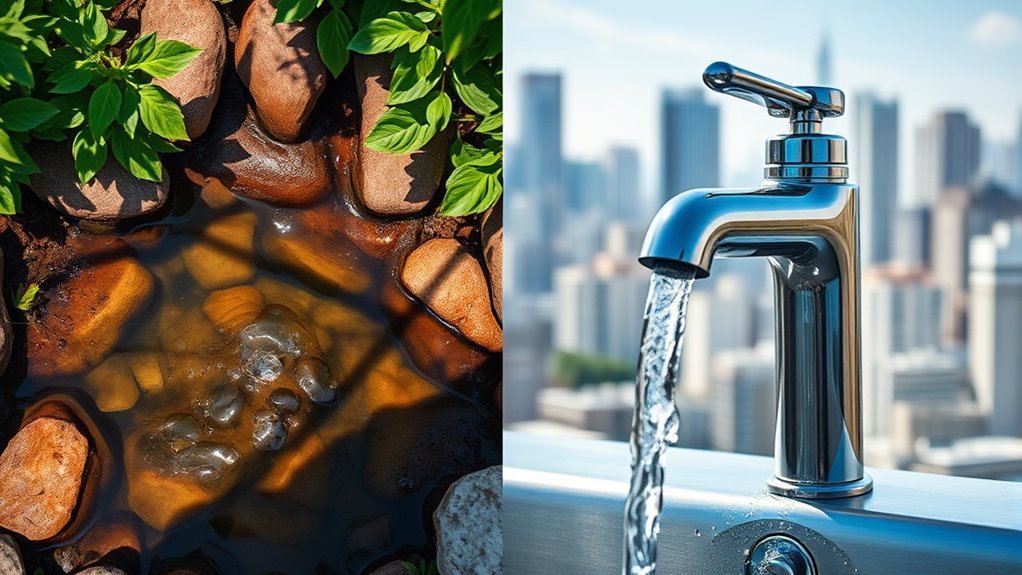
When choosing between well water and city water, consider three essential differences. First, well installation costs can range from $5,300 to $9,200, while city water incurs lower fees but can lead to significant monthly bills. Second, city water is government-regulated, ensuring safety, while well water requires owner-managed testing. Finally, environmental impacts differ, as well extraction affects local aquifers, unlike city water’s infrastructure demands. Understanding these factors can guide your decision-making process further.
Cost Structure and Maintenance Responsibilities
When considering your water supply options, understanding the cost structure and maintenance responsibilities is essential to making an informed decision.
Installing a well typically costs between $5,300 and $9,200, with additional expenses for treatment systems. In contrast, connecting to city water incurs minimal initial fees, especially if the infrastructure’s already present.
Installing a well costs $5,300 to $9,200, while connecting to city water has minimal initial fees if infrastructure is available.
Monthly city water costs range from $30 to $100, while well users face predictable annual maintenance fees of $300 to $800. You’ll need to manage regular testing and potential repairs for well systems, unlike city water maintenance handled by the municipality. City water bills can total $3,600 to $12,000 over a decade without accounting for hidden fees related to sewer services.
While well water may seem more costly upfront, its predictability in ongoing expenses and absence of monthly bills can lead to greater long-term affordability.
Water Quality and Safety Considerations
While choosing between well water and city water, understanding the nuances of water quality and safety is critical.
City water, regulated by the EPA, undergoes regular testing for contaminants, guaranteeing consistent safety. You’re provided with public access to test results, and treatment processes typically include sediment filtration and chemical disinfection. Additionally, city water is treated and monitored to ensure it meets strict safety standards.
In contrast, well water isn’t government-regulated; you’re responsible for testing, usually for bacteria, nitrates, and specific local contaminants.
Furthermore, while city water may contain regulated levels of chlorine and fluoride, well water often harbors natural contaminants like iron and viruses, posing potential risks if not monitored.
Home filtration systems can mitigate these risks for both sources, but well water demands more attention to ascertain safety.
Availability, Access, and Environmental Impact
Understanding the availability and access of well water versus city water is essential for making informed choices about your water supply. Here are key factors to take into account:
- Well water offers direct access from private property but requires ongoing maintenance.
- City water relies on municipal infrastructure, ensuring consistent service for most populations.
- Well availability can be restricted by geology and drought, demanding thorough assessment before drilling.
- Environmental impacts differ, with well water drawing from local aquifers and city water potentially affecting biodiversity through large withdrawals.
These aspects highlight the importance of evaluating not just access but also the broader implications for you and your community when choosing between well water and city water.
Conclusion
In conclusion, understanding the differences between well water and city water can greatly impact your decision-making process. Remember, “you get what you pay for”—consider the cost and your maintenance responsibilities for each option. Evaluating water quality and safety is paramount, as well as considering availability and environmental effects. By weighing these factors, you can make a more informed choice that suits your lifestyle and sustainability goals.