What Is Real Blue Raspberry and How Does It Taste?
Not all fruits are what they seem; discover the intriguing origins and unique flavor profile of blue raspberry that keeps everyone wanting more.

Real blue raspberry flavor isn't derived from a natural fruit; it's a synthetic creation inspired by certain raspberry varieties. You'll notice its sweet and tart profile, which combines essences from fruits like banana and cherry, creating a vibrant taste experience. Its unique flavor sets it apart from traditional berries, contributing to its popularity in treats like snow cones and candies. If you're curious about its fascinating origin and how it became a summer staple, there's more to explore.
Although you might associate blue raspberry with vibrant summer treats, it's important to know that this flavor isn't derived from a naturally occurring berry. Instead, blue raspberry is a synthetic flavor created in laboratories, modeled after certain raspberry varieties. It became popular as a substitute for red flavors, primarily using Brilliant Blue dye (FD&C Blue No. 1) to achieve its iconic bright hue. This flavor is prevalent in snacks like ICEE, Otter Pops, and various candies, providing a distinct taste that many consumers enjoy.
When you taste blue raspberry, you'll notice it's sweeter and more tart than traditional raspberries. Unlike the natural raspberry, which has a more balanced flavor profile, blue raspberry leans towards a sweeter experience with a tartness reminiscent of citrus fruits. This unique blend of flavors often incorporates esters from other fruits, such as banana, cherry, and pineapple, creating a complex fruity undertone that enhances its appeal. The result is a flavor that's not only enjoyable but also noticeably different from other berry tastes.
Blue raspberry offers a sweeter, tart experience, blending fruity esters for a uniquely enjoyable flavor.
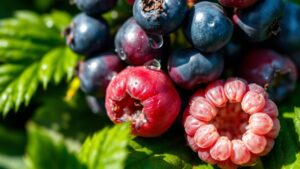
While the blue raspberry flavor doesn't have a natural counterpart, its inspiration is rooted in the blackcap raspberry, scientifically known as Rubus leucodermis. This deep purple berry is native to Western North America and offers a tart flavor, although it lacks the bright blue color that blue raspberry products exhibit. The blackcap raspberry is relatively rare and not widely recognized, which further emphasizes the artificiality of the blue raspberry flavor you encounter in various products.
The use of Brilliant Blue dye in these products plays a vital role in their visual appeal. This FDA-approved dye was introduced to replace Red No. 2 after health concerns arose. By using blue instead of red, manufacturers successfully reduced confusion among consumers regarding flavors, paving the way for blue raspberry to carve out its niche in the marketplace. This decision greatly impacted the snack and beverage industries, leading to a surge in blue raspberry-flavored offerings, and the shift was largely influenced by the ban on Red No. 2 dye.
Historically, blue raspberry made its debut in the 1950s, first mentioned by Gold Medal for cotton candy. However, it wasn't until the 1970s that the flavor gained widespread popularity, particularly after the banning of Red No. 2 in 1976. Brands like ICEE and Otter Pops were at the forefront of this trend, solidifying blue raspberry's place in the domain of summer treats.
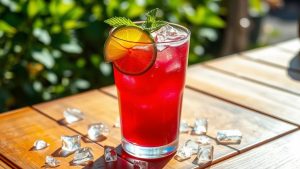
Today, blue raspberry remains a staple in various desserts, beverages, and candies. It's found in snow cones, energy drinks, syrups, and popular candies like Jolly Ranchers. Its vibrant color and distinct flavor contribute to its iconic status and seasonal popularity, especially during warmer months.
As a beloved flavor among many, blue raspberry evokes nostalgic memories and is often associated with childhood treats that left blue stains on tongues. Its unique combination of tangy sweetness makes it a versatile option in both beverages and baked goods, ensuring its continued presence in the market.
Conclusion
To summarize, real blue raspberry is as elusive as a unicorn in a candy store. It's not a fruit, but a synthetic flavor that tickles your taste buds with a sweet-tart symphony, leaving you wondering why nature didn't think of it first. So, the next time you indulge in that vibrant blue treat, remember: you're savoring a slice of culinary creativity, not a berry plucked from some fantastical bush. Enjoy the fiction, because who needs reality when you've got blue raspberry?