What Makes Rainwater Safe to Drink?
Discover the key processes that guarantee rainwater is safe to drink, but what crucial steps could you be overlooking?
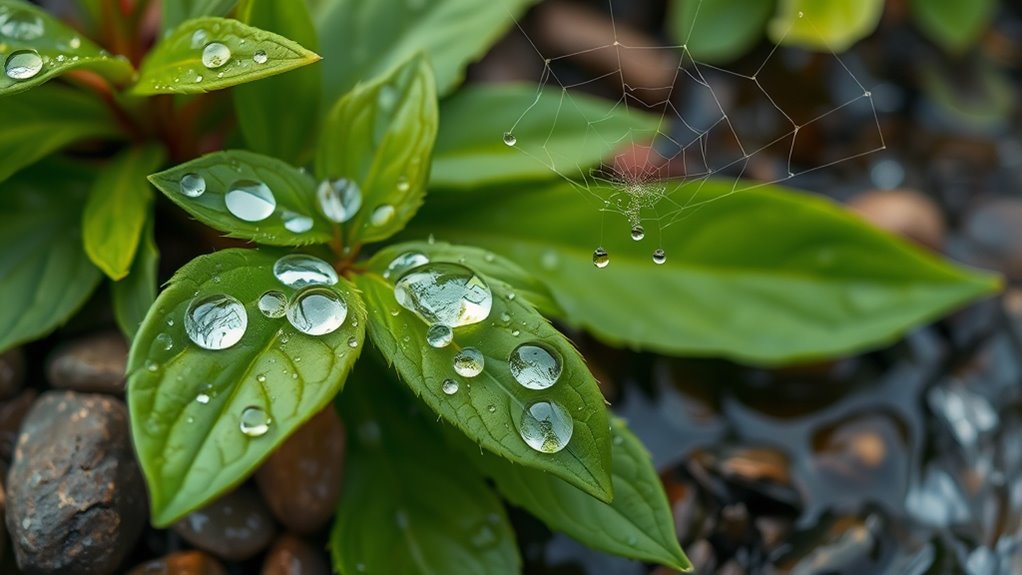
To guarantee rainwater is safe to drink, you need proper filtration and treatment to remove contaminants like PFAS, heavy metals, and harmful pathogens. Using first-flush diversion systems helps eliminate initial runoff contaminants. Multiple filtration stages, including sediment filters and activated carbon, enhance water quality by addressing particles and impurities. For the highest purification level, reverse osmosis is effective in removing dissolved substances. Curious about additional techniques for safe rainwater collection and maintenance?
While rainwater harvesting offers a sustainable water source, guaranteeing its safety for drinking requires careful consideration of potential contaminants. You mightn’t realize that rainwater can harbor various health risks such as PFAS, heavy metals like lead and arsenic, microplastics, and harmful pathogens. Disease-causing microorganisms from birds and other animals represent some of the most serious dangers, as these pathogens can infiltrate the collected rainwater, posing a considerable health threat.
When rainwater lands on roofs, it collects debris and microbial pollutants that accumulate during the collection process. The longer rainwater sits in storage tanks, the more bacteria can proliferate, necessitating treatment not only during collection but also throughout the storage phase. Regular maintenance of collection surfaces is essential for maintaining water quality and preventing additional contamination. Implementing effective rainwater harvesting systems can greatly enhance the quality of harvested water and reduce health risks.
To mitigate these risks, implementing first-flush diversion systems can be exceptionally beneficial. These systems automatically divert the initial, contaminated runoff away from your storage tanks during rainfall events. With timer settings, you’re able to adjust the collection delay, guaranteeing that only cleaner portions of rainwater enter your main tank.
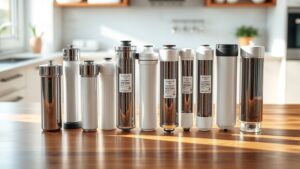
A pre-filtration stage, utilizing filters rated at least 30 microns, further isolates larger particles, reducing the amount of sediment, leaves, and other debris that can compromise water quality. Once you’ve addressed initial collection issues, sediment and particulate filtration methods can provide additional clarity. For instance, sediment filters effectively remove sand, dirt, and leaves but may not tackle viruses.
While polypropylene and ceramic cartridge filters can handle sediment and some bacteria, they’re limited when it comes to viral contaminants. You might consider employing mollusk sand filtration combined with gravel, as this method has proven to effectively reduce turbidity, demonstrating a remarkable 72% efficacy.
Ultrafiltration membrane filters can take this a step further, offering enhanced particle removal, including some viruses. Activated carbon serves as another layer of protection. Its absorption capabilities allow it to remove chlorine, pesticides, and unpleasant taste and odor compounds, while also effectively reducing lead concentrations.
Achieving a 99.47% effectiveness rating against lead, activated carbon treatment can greatly improve the overall quality of your rainwater. Just remember to maintain and periodically replace these filters to guarantee their efficacy remains intact.
Lastly, if you’re seeking the highest level of purification, reverse osmosis technology comes highly recommended. This advanced method removes dissolved minerals, PFAS, heavy metals, and microplastics, leaving your water as clean as possible. Following NSF/ANSI Standard 53 for specific contaminants helps ensure the safety of your drinking water. Combining multiple filtration stages with reverse osmosis can create an all-encompassing treatment approach, giving you peace of mind regarding the safety of your harvested rainwater.
Conclusion
In summary, while rainwater can be safe to drink, it requires careful collection and treatment to guarantee its purity. Notably, studies show that rainwater can contain fewer contaminants than some municipal sources, with fewer than 1 in 1,000 rainwater samples failing safety standards. This emphasizes the importance of proper filtration and storage methods. By understanding the factors that influence rainwater quality, you can make informed decisions about its safety, tapping into a crucial and often overlooked resource for hydration.