Key Differences: Boiled Water vs. Distilled Water
How do boiled and distilled water differ in safety and purity? Discover the crucial distinctions that can impact your hydration choices.

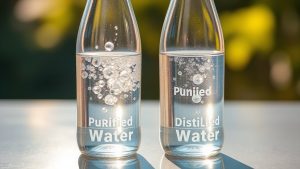
Boiled water is heated to kill pathogens while retaining minerals, making it safe for hydration. In contrast, distilled water undergoes a process of boiling and steam capture, removing nearly all impurities and minerals. Consequently, distilled water is pure and often used in labs and medical settings, while boiled water is more accessible and cost-effective for everyday use. Each type of water has its specific applications, and understanding these can help you choose wisely.
When comparing boiled water and distilled water, understanding their distinct purification methods is essential. Boiling water involves heating it to its boiling point, usually around 100°C, which effectively kills bacteria and viruses present. You can achieve this using a simple kettle or pot, making it accessible for everyday use. However, this process retains the minerals found in the original water, meaning that while it's safe to drink, it doesn't eliminate all impurities.
Understanding the distinct methods of boiling and distilling water is key to choosing the right purification process for your needs.
On the other hand, distillation involves a more complex process. First, water is boiled, and then the steam is captured and condensed back into liquid form. This method not only kills microorganisms but also removes nearly all impurities, including minerals. As a result, distilled water is greatly purer than boiled water. The equipment required for distillation is specialized and not commonly found in households, which adds to the complexity and cost of this process.
In terms of purification effects, boiling water effectively eliminates pathogens but doesn't alter its mineral composition. For instance, minerals like calcium and magnesium remain intact in boiled water, contributing to its taste and potential odor. Conversely, distilled water is virtually devoid of these minerals, providing a neutral taste and odorless quality. This lack of minerals is a double-edged sword; while it results in cleaner water, it may not be ideal for hydration needs, as minerals play a role in nutritional balance. Additionally, distilled water's purity makes it particularly advantageous in applications that require high standards, such as laboratory work.
When considering usage scenarios, distilled water is often preferred in laboratory and medical settings due to its high purity level. This makes it suitable for applications requiring exacting standards, such as pharmaceuticals or scientific research. In contrast, boiled water is commonly consumed for hydration. While boiling effectively kills pathogens, if you're concerned about mineral buildup in devices or machinery, distilled water is the better option, as it prevents scale formation caused by mineral deposits.
Cost and accessibility also differ between these two methods. Boiling water is generally inexpensive and requires minimal equipment, making it easy for anyone to produce safe drinking water. Distillation, however, incurs higher costs due to the need for specialized apparatus and processes. As a result, many people opt to purchase distilled water rather than attempt home distillation, which isn't feasible without the right equipment.
Conclusion
To sum up, while boiled water and distilled water may seem like two sides of the same coin, they diverge in purity and purpose. Boiled water, a warrior against pathogens, offers a temporary shield, while distilled water stands as the ultimate purveyor of purity, free from minerals and impurities. Depending on your needs—safety or precision—each has its role in the grand tapestry of hydration. Choose wisely, and you'll quench your thirst with clarity and intention.