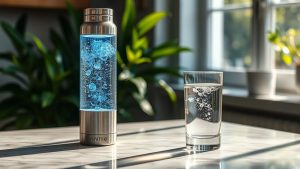
How Many Calories Are in Water?
Just how many calories are in water, and how does it influence your hydration and overall health? Discover the surprising truths behind this essential drink.

Water contains zero calories, making it an essential part of your daily diet without adding to your caloric intake. It consists of just hydrogen and oxygen, lacking macronutrients that provide energy. Staying hydrated supports your metabolism and can help regulate your appetite. Most types of water, including tap and bottled varieties, remain calorie-free unless sugars or flavors are added. You might discover more about hydration's role in overall health and how it affects weight management.
Have you ever wondered how many calories are in water? You might be surprised to learn that water contains zero calories. This absence of calories stems from its basic composition, which is solely hydrogen and oxygen (H2O). Since water lacks macronutrients like carbohydrates, proteins, and fats, it provides no energy. This is why it's such an important part of your diet; it supports numerous bodily functions without adding to your caloric intake.
Water constitutes about 55-60% of the human body, playing a significant role in temperature regulation, nutrient transport, and various metabolic processes. When you stay adequately hydrated, your body can maintain its functions efficiently. Drinking water can even help regulate your appetite, leading to reduced caloric intake overall. In fact, studies suggest that consuming water before meals can help control hunger, making it easier to manage your weight. Original research indicates that staying hydrated may also improve overall health and well-being.
Water plays a crucial role in maintaining bodily functions and regulating appetite, supporting effective weight management.
Most types of water, including tap and bottled water, generally contain zero calories. Even mineral water, while it may have some trace minerals, doesn't greatly increase the calorie count. Sparkling water is typically calorie-free unless sweeteners or sugars are added. However, you should be cautious with flavored waters and vitamin waters, which often contain added sugars that can elevate their calorie content considerably. Coconut water, while low in calories, has natural sugars and electrolytes, so it's important to be mindful of how much you consume.
Your hydration level directly impacts your metabolism. Adequate water intake can enhance your metabolic rate, aiding in weight loss and fat breakdown. On the flip side, insufficient hydration can lead to decreased metabolism and potential weight gain. Furthermore, dehydration can impair cognitive function and physical performance, emphasizing the need for regular water consumption. The recommended daily intake is about 2.7 liters for women and 3.7 liters for men.
When comparing water to other beverages, the differences in calorie content become evident. Fruit juices and carbonated soft drinks often contain calories due to natural sugars and artificial sweeteners. Even energy drinks, while they might have no calories, can contain substances that aren't beneficial for your health. Conversely, sparkling water and soda water are generally calorie-free unless flavored.
Conclusion
To sum up, water contains zero calories, making it an essential companion for hydration without adding to your caloric intake. Think of it as nature's pure elixir, invigorating and crucial for life. By choosing water over sugary beverages, you're not just quenching your thirst; you're also supporting your body's functions and overall health. So, drink up! Every sip of water is a step towards a healthier, more vibrant you, free from unnecessary calories.