What Are Home Softener Water Systems and How Do They Function?
Home softener water systems transform hard water into soft water through ion exchange, but what happens during the regeneration cycles? Discover the details inside.

Home softener water systems treat hard water by using a process called ion exchange. As water flows through a resin tank, resin beads capture calcium and magnesium ions, replacing them with sodium ions. The system consists of a resin tank, brine tank for salt, and a control valve. Regular regeneration cycles are necessary to maintain effectiveness, allowing the system to continue producing softened water. Discover the various types and benefits to find the right solution for your needs.
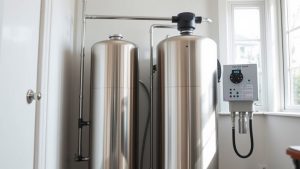
Home softener water systems play an integral role in enhancing water quality by effectively removing hardness minerals, such as calcium and magnesium, through an ion exchange process. These systems primarily consist of three main components: a resin tank, a brine tank, and a control valve. When hard water flows through the resin tank, it encounters resin beads that are negatively charged. These beads attract and hold the positively charged hardness ions, thereby exchanging them for sodium ions. This process results in softened water, which is more efficient for household use.
The ion exchange process is the heart of these systems. As you use water in your home, hard water enters the resin tank, where the resin beads capture calcium and magnesium ions. Over time, the resin becomes saturated with these hardness minerals, necessitating a regeneration cycle. During this cycle, you add salt to the brine tank, which creates a concentrated brine solution. This solution flows through the resin tank, replacing the accumulated hardness ions with sodium ions, effectively rejuvenating the resin beads and readying them for another round of softening. Salt is essential for maintaining the effectiveness of the system during this regeneration cycle.
The ion exchange process rejuvenates resin beads, ensuring continuous softening by replacing hardness ions with sodium during regeneration.
Water softeners come in various types to suit different needs. Demand-initiated systems regenerate based on actual water usage, making them more efficient. Timer-based systems, on the other hand, regenerate at preset intervals, regardless of water consumption. Salt-free systems don't soften water in the traditional sense but may condition it to reduce limescale buildup. For thorough solutions, whole-house systems treat all water entering your home. Dual-tank systems provide continuous service even during regeneration, ensuring you never run out of softened water.
The benefits of using a home softener water system are significant. By reducing mineral buildup, these systems enhance the efficiency of appliances, extending their lifespan. You'll also notice improvements in personal care; softened water can soothe and moisturize your skin and improve the condition of your hair. Additionally, using softened water can lead to energy savings, as it reduces scaling in water heaters, and you may find yourself using less detergent due to better lathering capabilities.
Maintaining your water softener is essential for peak performance. The frequency of regeneration largely depends on your household's water usage, so you need to monitor this aspect closely. Adding salt to the brine tank is necessary for the regeneration process, and you'll need to clean the system periodically to maintain its efficiency.
While the initial investment in a water softener might seem high, the long-term savings on appliance repairs and detergent costs can justify the expense. Lastly, it's important to reflect on local water regulations regarding brine discharge, especially if you're on a municipal water system. Understanding these aspects will help you choose the right system that fits your needs while ensuring compliance.
Conclusion
In summary, home softener water systems play an essential role in enhancing water quality by removing minerals that cause hardness. By employing ion exchange processes, these systems not only protect your plumbing but also improve the efficiency of appliances. Investing in a water softener is like hitting two birds with one stone; you guarantee better tasting water while extending the lifespan of your home's plumbing. Ultimately, the benefits far outweigh the initial costs, making it a wise choice for any homeowner.