Troubleshooting a Fridge Making Loud Noises
Loud noises from your fridge could signal various issues; discover the common causes and solutions that can save you from costly repairs.
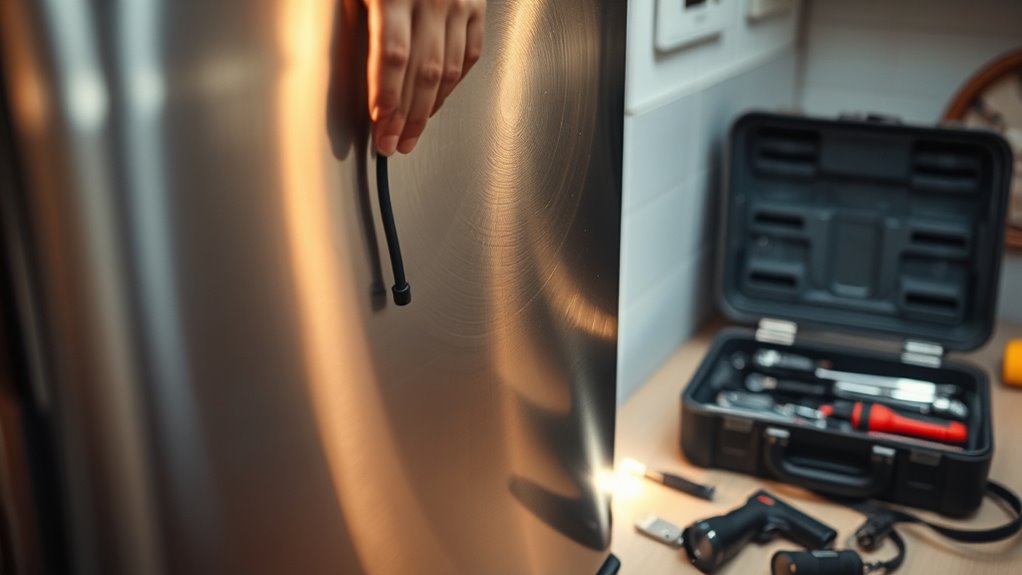
If your fridge is making loud noises, it could mean a few things. Check the back for issues with the condenser fan or compressor. Noises from the bottom may indicate a loose drain pan. Internal sounds often point to the evaporator fan. Inspect for ice buildup and ascertain nothing’s obstructing airflow. Regular cleaning and maintenance can help prevent these problems. Curious about specific fixes or costs associated with repairs? There’s more information to assist you ahead.
If your fridge is making an unusual noise, it’s vital to identify the source quickly to prevent further damage. Understanding the common causes of these sounds can help you diagnose the issue effectively. For instance, a faulty condenser fan motor often produces loud humming or buzzing sounds. Similarly, if you hear squealing or grinding noises, it might be due to a malfunctioning evaporator fan. Rattling or vibrating sounds may point to clogged or dirty condenser coils, forcing the fridge to work harder than necessary. Additionally, loose internal components can create knocking or clicking noises, while issues with the defrost timer or heater may produce annoying ticking or scraping sounds.
To narrow down the noise source, start by determining its location. If the sound emanates from the back of the fridge, it could be linked to the condenser fan, compressor, or defrost timer. Noises from the bottom may indicate a loose drain pan or uneven leveling, causing vibrations or rattling. If the noise is inside, it likely involves the evaporator fan, especially if airflow is restricted. You might also hear items shifting or vibrating at the top while the compressor runs. In the freezer section, be on the lookout for ice buildup around the fan blades, which can cause buzzing or rattling noises.
Begin diagnosing the noise by actively listening and pinpointing its source. A loud, continuous humming or rattling near the back usually indicates compressor issues. If you suspect a problem with the condenser fan, inspect it for dust, debris, or loose screws that may cause noise. To check the evaporator fan, push the freezer light switch; if the noise increases, the fan may be faulty. Keep an eye out for loose or vibrating components such as screws, bolts, panels, or drain pans that may need securing.
Regular cleaning and maintenance can help prevent noise issues. Clean the condenser coils frequently to maintain airflow and efficiency. Removing dust and debris from the condenser and evaporator fan blades is also essential. Make certain the drain pan is clean to prevent clogs and reduce vibrations. Check for ice buildup around the freezer fan and initiate a defrost if needed. Avoid overstuffing the freezer to ensure adequate air circulation as it can lead to increased noise and ice buildup. Lubricating moving parts like door hinges and roller wheels can further minimize noise.
For evaporator fan issues, be aware that ice buildup around fan blades can cause buzzing or rattling. An overstuffed freezer restricts airflow, increasing ice formation and noise. If the defrost thermostat fails, it won’t complete the defrost cycle correctly, leading to ice accumulation. Inspect the fan blades for cracks or damage which may necessitate replacement.
For compressor and condenser problems, loud humming or rattling near the back typically signals trouble. Consider that compressor repairs or replacements often require professional assistance.
If repairs become necessary, technician diagnosis and costs range from $120 to $400, depending on the issue, with evaporator or condenser fan replacements costing between $120 and $350. Compressor repairs are usually more expensive, frequently amounting to $150 to $400. Additionally, hinge adjustments or lubrication generally fall within a cost range of $120 to $350. Consequently, addressing these noises promptly can save you from more significant expenses down the line.
Conclusion
In summary, addressing a fridge making loud noises is like tuning a musical instrument; minor adjustments can restore harmony. Check for loose components, verify it’s level, and examine the compressor and fan. If the noise persists, consider consulting a professional. Tackling these issues promptly can save you from future headaches and keep your appliance running smoothly. Don’t let a noisy fridge disrupt your daily life—take action and enjoy the peace and quiet you deserve.