How to Determine if Coconut Water Does Go Bad
Gather insights on how to tell if coconut water has spoiled, because knowing the signs can save you from a bad sip!
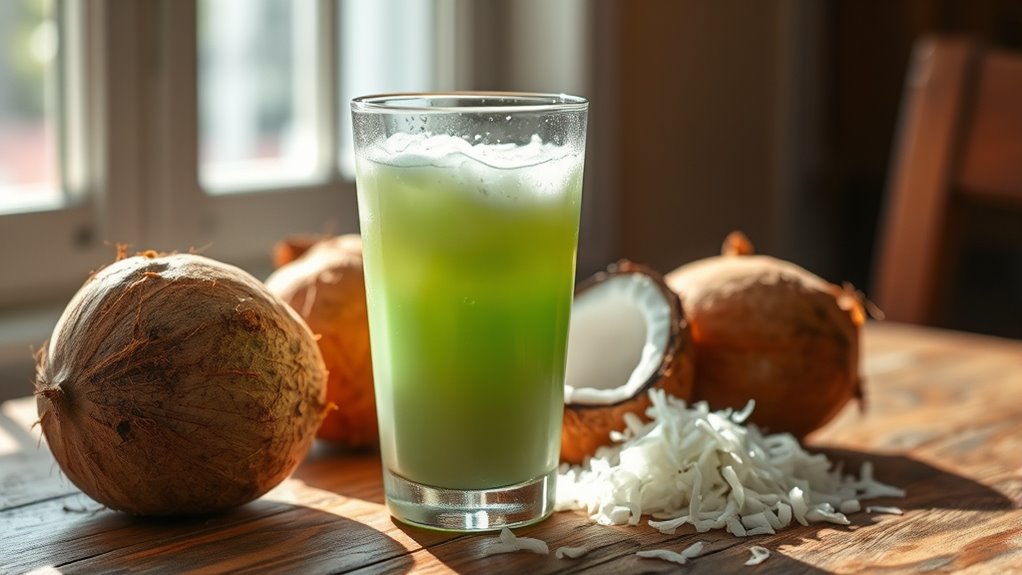
To determine if coconut water has gone bad, check for sour smells or off tastes, which indicate fermentation. Look for cloudiness or a pink hue, and avoid any bottles with floating particles. If it feels fizzy, it’s likely spoiled. Always store opened coconut water in the fridge, ideally for 2-5 days, and consume fresh coconut water within 24-48 hours. Learn more about proper storage and spoilage signs to keep your coconut water fresh.
When you’re sipping on coconut water, it’s essential to know how to determine if it has gone bad to avoid potential health risks. Spoiled coconut water can harbor harmful bacteria, leading to gastrointestinal issues or other ailments. The first indicator to sniff out is the smell. If it has a sour or off-putting scent, chances are fermentation has occurred, signaling bacterial growth.
You should also pay attention to the taste. If the flavor differs from the naturally sweet and invigorating profile of fresh coconut water, it’s wise to discard it.
Visually inspecting the liquid is equally important. Fresh coconut water is typically clear, but if you notice cloudiness or a pink hue, it’s a strong indication that spoilage has begun. Additionally, floating sediment or particles can point to contaminants, making the drink unfit for consumption. A fizzy or carbonated sensation when you take a sip is another red flag, as this suggests fermentation is in full swing.
Proper storage of coconut water directly affects its longevity. For opened bottles, the ideal refrigeration range lies between 32°F to 39°F (0°C to 4°C). Room temperature storage for unopened varieties shouldn’t exceed 68°F (20°C). It’s essential to avoid temperature fluctuations, especially in refrigerator door areas, where conditions may shift frequently. Exposure to extreme heat and light can also degrade coconut water quickly. Cold storage not only slows down bacterial growth but also preserves its freshness and nutritional value. Proper storage practices prevent spoilage and extend shelf life.
Proper storage is crucial for coconut water’s freshness; refrigerate opened bottles at 32°F to 39°F and avoid temperature fluctuations.
Shelf life varies depending on whether the bottle is opened or unopened. Unopened shelf-stable coconut water generally lasts 6-12 months when stored in a cool, dark place. Tetra Pak packaging, like that used by brands such as Vita Coco, allows products to remain fresh without additives. However, some brands might spoil quicker.
Once you open a bottle, the game changes; it typically remains good for 2-5 days in the refrigerator, although fresh coconut water from a real coconut requires consumption within 24-48 hours.
Packaging can also influence how long coconut water lasts. Glass bottles outperform plastic containers regarding taste and quality retention. The Tetra Pak design allows for extended shelf life without additives, while pop-top cans should be transferred to airtight glass containers after opening. For fresh coconut water, sterilized glass bottles are your best bet within 1-2 hours of extraction.
Lastly, some manufacturers enhance their products with preservatives like vitamin C or ascorbic acid to extend shelf life. If you want to keep your coconut water for longer, consider freezing it in ice cube trays or airtight containers, though use it ideally within 2-3 months for ideal quality.
Conclusion
To assess if your coconut water has gone bad, always check for changes in color, smell, and taste. Imagine opening a carton of coconut water, only to be greeted by a sour odor and an off-taste that leaves your palate unsettled. This scenario underscores the importance of vigilance. If you spot any signs of spoilage, it’s best to discard it to avoid digestive issues. Trust your senses; they’ll guide you to a fresh coconut experience every time.