Do K-Cups Expire?
Should you worry about K-Cup expiration dates? Discover the surprising truth behind their shelf life and storage tips for optimal flavor.
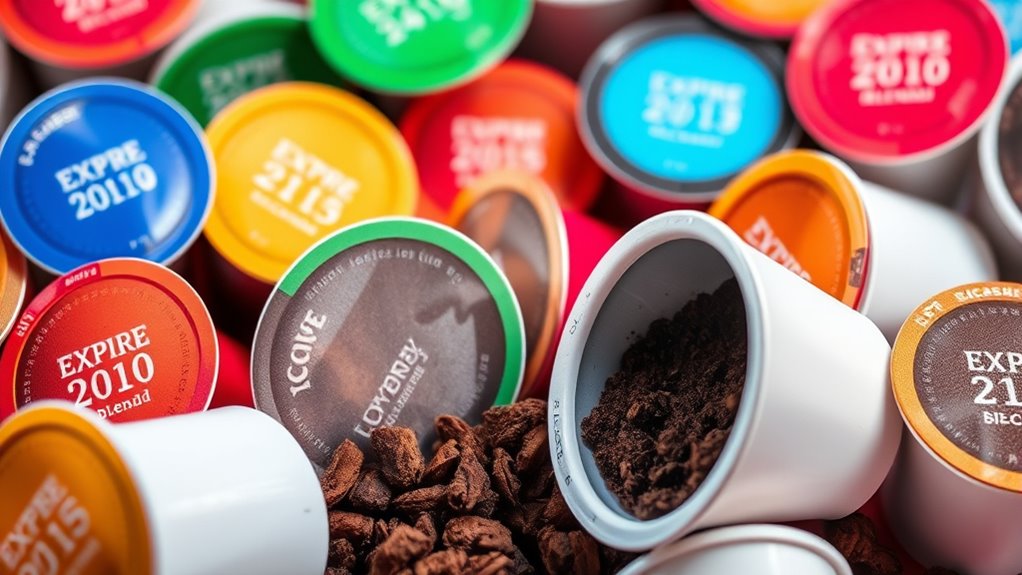
K-Cups don’t technically expire; they have a “best by” date, indicating peak freshness and flavor. If the seal remains intact, you can safely use them after this date. While spoilage is rare due to airtight packaging, the flavor and aroma might decline over time. For ideal taste, it’s best to consume them within 3 to 6 months past the date. Want more insights on how to store them for maximum freshness?
Have you ever wondered if your K-Cups go bad? It’s a common concern, especially when you see that date stamped on the box. But here’s the truth: K-Cups don’t technically expire. What you see isn’t really an expiration date; it’s a “best by” date, which indicates peak freshness and ideal flavor. This date serves as a guideline from manufacturers to help you enjoy your coffee, tea, or hot chocolate at its finest. You can rest assured that if the packaging remains intact after this date, your K-Cups are still safe to use.
Typically, K-Cups have a shelf life of about 8 to 12 months from the manufacturing date for coffee. For tea and hot chocolate, the lifespan ranges from 6 to 12 months. K-Cups Apple Cider fall within a similar time frame, with a shelf life of 8-12 months. If you store them properly, you might find that they last even longer than these estimates. Airtight packaging helps maintain freshness for a longer duration as it protects the contents from air and moisture.
However, it’s worth noting that while the product remains safe to consume, both flavor and aroma tend to decline after the best by date. So, while you can sip that cup, the experience mightn’t be what it once was.
One key point to keep in mind is that K-Cups are safe to use even after the best by date, provided the seal is unbroken. There aren’t significant health risks associated with using K-Cups post that date. Spoilage is rare due to the airtight, nitrogen-flushed packaging that prevents contamination. As long as you check for any visible damage or off odors before brewing, you’re likely in the clear.
However, don’t ignore the decline in flavor quality. As K-Cups age, you may notice your coffee tasting stale, flat, or a bit acidic. Hot chocolate and tea may lose their creaminess or potency, and specific varieties, like dark roast or flavored K-Cups, tend to degrade more quickly. Ideally, you’ll want to consume them within 3 to 6 months after their best by date for the best flavor experience.
For ideal storage, keep your K-Cups in a cool, dry spot, away from sunlight and heat sources. The pantry or cupboard is an perfect location. Humidity can be detrimental, so steer clear of moist environments to prevent any absorption that could affect quality. Proper storage extends shelf life and minimizes flavor loss.
When purchasing K-Cups, remember that manufacturers like Keurig and Peet’s Coffee have labeled these products with best by dates, not expiration dates. The industry consensus confirms that K-Cups remain safe if their packaging stays intact. No major recalls or significant safety warnings exist around using K-Cups post their “best by” date.
Conclusion
In summary, while K-Cups don’t technically “expire,” their flavor and quality can diminish over time. Think of them like an unopened bottle of soda—while it may still be safe to drink after the due date, the fizz and taste fade, leaving you with a flat experience. To guarantee you enjoy your coffee at its best, use your K-Cups within the recommended timeframe, and savor the rich flavors they promise. Your taste buds will thank you!