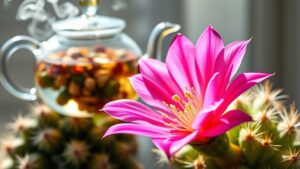
What Is the Unique Dragon Fruit Flower?
Keen to discover the secrets of the unique dragon fruit flower’s nocturnal beauty and pollination strategies? Dive into its fascinating world now!
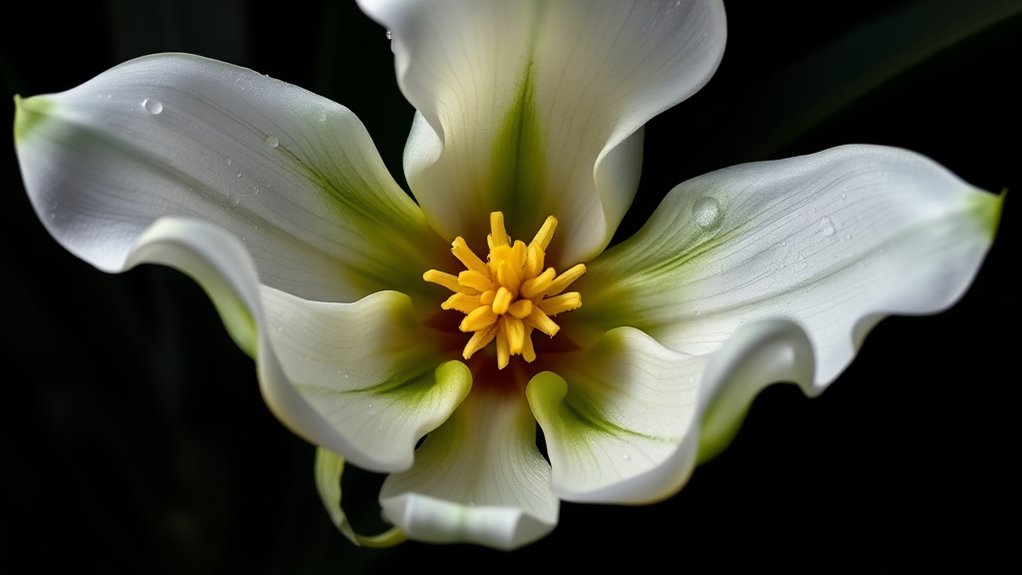
The unique dragon fruit flower, belonging to the cactus family, showcases exquisite blooms that open exclusively at night. With its large, bell-like shape and striking multi-tonal coloration, the flower features both yellow-green sepaloid and white petaloid tepals. This nocturnal opening attracts specific pollinators through a notable fragrance. Its remarkable structure, including a long floral tube and spatial separation between stigma and anther, promotes effective cross-pollination. There’s so much more to uncover about this fascinating plant and its adaptations.
The unique dragon fruit flower, known for its striking appearance and remarkable adaptations, showcases a fascinating blend of morphological features that contribute to its reproductive success. With its structure, these flowers are perfect and monoecious, meaning they contain both male (stamens) and female (pistil) organs within a single flower. The long floral tube averages about 27.8 cm, accentuating its delicate beauty and complexity.
The dragon fruit flower’s stunning morphology and reproductive efficiency highlight nature’s remarkable adaptations for survival.
Surrounding this tube is the flower perianth, which consists of two distinct types of tepals: sepaloid, which are typically yellow and greenish, serving to cover the floral tube, and petaloid, which are white and lance-ovate, forming a stunning rim around the flower. You’ll notice that these stamens are apostemonous; they number around 1,016 per flower and are arranged in a spiral along the tube, enhancing the likelihood of effective pollination. Remarkably, the style exceeds the length of the stamens, providing a spatial distance of approximately 1.66 cm between the stigma and anther, further promoting reproductive efficiency.
When you look closely at the flower’s size and shape, the buds can grow impressively long, reaching 27 to 28 cm before blooming. Once fully open, the flowers assume a large, bell-like shape, with a diameter spanning from 20 to 29 cm. You can’t help but see the resemblance to an elongated funnel in their design. The slender, delicate petals, primarily white with a yellowish center, contrast strikingly with the green sepaloid tepals at the base, creating a visually appealing multi-tonal effect.
You’ll find that the flowering cycle of these unique blooms is particularly fascinating, as they exclusively bloom at night, typically opening between 6:30 PM and 10:00 PM, and they last only a single night. This nocturnal blooming aids in attracting nocturnal pollinators, greatly enhancing their reproductive success. In fact, these flowers began to play a vital role in the local agricultural landscape in Malaysia after their introduction in the late 1990s.
During bloom, the flowers emit a notable fragrance, which not only attracts pollinators but also plays a role in maximizing pollination potential through changes in color, size, and nectar secretion. Additionally, the flowers depend on night-blooming adaptations to ensure their pollination occurs efficiently, allowing them to thrive in their unique habitats.
Focusing on pollination and reproductive biology, the dragon fruit flower displays vital reproductive parts, including stigma, anther, pollen, filament, style, and ovary. After pollination, pollen tubes grow rapidly, reaching the ovary within just four days to fertilize the ovules. Additionally, the flower’s spatial separation between stigma and anther promotes effective cross-pollination, something essential for genetic diversity. In cultivation, hand pollination is sometimes employed to guarantee fruit set.
Finally, dragon fruit flowers belong to the cactus family (genus Hylocereus or Selenicereus), characterized by climbing or sprawling plants that can reach heights of up to 9 meters. Their adaptations, such as thick, ribbed stems with short spines and aerial roots, support their growth in various environments.
The structure of the floral tube and tepals not only protects delicate reproductive organs but also aids in their nocturnal opening, showcasing nature’s incredible adaptations for reproductive success.
Conclusion
In conclusion, the unique dragon fruit flower, with its enchanting beauty and nocturnal charm, invites you to marvel at nature’s wonders. Its fleeting bloom represents both a delicate whisper and a bold statement, showcasing an intricate design that plays an essential role in fruit production. As you reflect on this botanical gem, remember that its short-lived presence is nature’s way of reminding us to appreciate ephemeral beauty in our own lives. Revel in the magic of the night-blooming dragon fruit!