Can You Put Stainless Steel in the Microwave?
Are you curious about the safety of using stainless steel in the microwave? Discover the surprising facts that could save your kitchen from disaster.
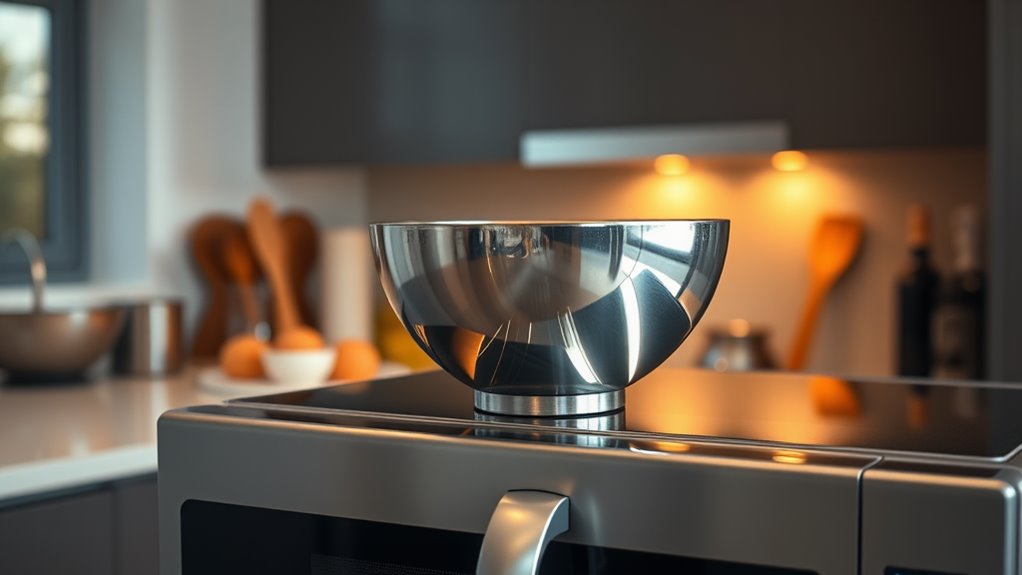
You shouldn't put stainless steel in the microwave. Its metal properties disrupt the microwave's heating process, leading to potential sparks and even fires. The reflective nature of stainless steel prevents microwaves from heating effectively, which can cause damage to both your food and the microwave itself. If you're unsure about what materials are safe to use, stay tuned to learn more about microwave-friendly options and tips for safe use in your kitchen.
Have you ever wondered whether it's safe to put stainless steel in the microwave? The short answer is no, it's generally not a good idea. Microwaves heat food by making water molecules rotate, generating heat through friction. However, when you introduce metals like stainless steel, you disrupt this process. Instead of heating your food, stainless steel can create sparks due to concentrated electrons at sharp edges, which poses significant safety risks.
The sparking phenomenon in microwaves can lead to fires, especially if the microwave isn't turned off quickly enough. Even though stainless steel is a common kitchen material, it's not considered microwave-safe. Most metal containers, including those made from stainless steel, can cause arcs that may damage both the appliance and your food. In fact, using stainless steel in a microwave can lead to permanent damage to the microwave itself.
Sparking in microwaves can cause fires and damage, making stainless steel unsafe for microwave use.
The reflective properties of materials like 304 stainless steel prevent microwaves from penetrating, making any heating ineffective. You might find some stainless steel products labeled as microwave-safe. However, these are specially designed to minimize the risk of sparks and arcs. They often feature smooth and rounded designs that help reduce the likelihood of concentrated electron buildup. Understanding the arc phenomenon is crucial for safe microwave use.
Still, it's important to exercise caution. If you're unsure about a container's safety, it's best to avoid using it in the microwave altogether. Consider safer alternatives for reheating food. Glass containers are a popular choice as they don't cause sparks and can effectively hold heat. Some microwave-safe plastics, like polyethylene and polypropylene, are also good options.
If you're dealing with food stored in metal containers, reheating them in an oven or on the stovetop is a much safer method. You can also explore thermal socks or wrapped containers, which can offer non-electric heating options for metal containers. When selecting materials for microwave use, pay attention to the design.
Containers with high-quality materials, like 18/8 stainless steel, may be used in specially designed microwave-safe products. These containers typically have integrated safety features that allow for safe electron distribution during heating. However, always check for certification and testing to verify a container is genuinely microwave-safe.
Conclusion
To summarize, you shouldn't put stainless steel in the microwave. While it may seem harmless, the metal can cause sparks and even damage the appliance. This highlights the importance of understanding materials and their properties in our everyday lives. By being mindful of what we use in the microwave, we not only guarantee safety but also extend the lifespan of our kitchen appliances. So next time, stick to microwave-safe containers and keep your meals worry-free!