What Is an Air Gap Fitting?
More than just a simple plumbing component, an air gap fitting prevents backflow—discover how it safeguards your water supply and why it matters.
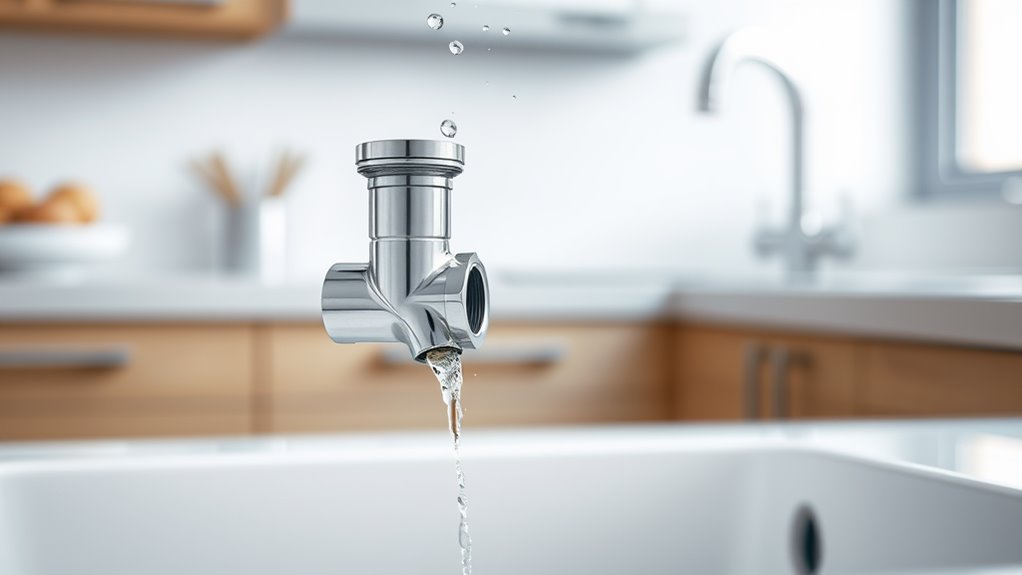
An air gap fitting is a crucial plumbing component that creates a physical separation between your potable water supply and potential contaminants, ensuring unidirectional flow. It's typically installed above sinks for appliances like dishwashers to maintain water integrity and comply with safety standards. This fitting prevents backflow, safeguarding public health. Regular maintenance is essential to keep it functioning properly. If you want to know more about installation and types, keep exploring further.
An air gap fitting is an important plumbing component designed to maintain the integrity of your potable water supply by preventing backflow and contamination. This fitting achieves its purpose by creating a physical separation between the water supply and potential contaminants. As a result, it guarantees that water flows in one direction, effectively stopping any unwanted substances from entering your clean water supply.
An air gap fitting is essential for safeguarding your potable water supply by preventing backflow and contamination.
You'll typically find air gap fittings in various plumbing applications, including sinks, toilets, and dishwashers, where compliance with health and safety standards is necessary.
The mechanical function of an air gap fitting revolves around maintaining a vertical distance between the water outlet and the rim of the fixture. This design prevents siphonage, a process where contaminated water could flow back into the clean supply. For a proper installation, the fitting must be positioned at least twice the diameter of the supply pipe above the overflow rim, with a minimum clearance of one inch. Air gap length requirements are critical to ensuring proper installation and function.
Common materials for these fittings include metal and plastic, chosen based on the specific application and environment. To confirm they work effectively, it's important to follow installation guidelines that comply with safety standards.
In residential plumbing, air gap fittings are often found in everyday fixtures like sinks and dishwashers. Their role becomes even more significant in commercial settings, such as restaurants and hotels, where the risk of contamination is higher.
Air gaps can also be integrated into various plumbing systems, including drainage and garbage disposal units. Regular maintenance of these fittings is essential to prevent clogging and guarantee they function as intended, safeguarding public health by preventing the spread of contaminants.
You might encounter different types of air gaps in your plumbing system. Visible air gaps are typically mounted above sinks, commonly seen in dishwashers. Conversely, invisible air gaps are integrated into the plumbing system, making them less apparent but equally important.
In more complex setups, like industrial or agricultural systems, air gaps play an important role in maintaining water quality. Their adaptability allows them to suit various plumbing configurations, providing tailored solutions for specific needs.
When considering design specifications, it's necessary to confirm adequate vertical clearance to prevent back-siphonage. The selection of materials and components is equally important, focusing on durability and resistance to corrosion.
Compliance with established regulatory requirements, such as those set by the Uniform Plumbing Code (UPC), is non-negotiable. Adhering to local and national plumbing codes ensures that your air gap fitting meets industry standards for water safety.
Finally, during installation, you must prioritize code compliance, accounting for pressure variations that could lead to contamination. The choice of materials can greatly impact the performance and longevity of the air gap fitting, making it an important consideration in your plumbing system.
Conclusion
In conclusion, an air gap fitting stands as a barrier against contamination, ensuring clean water flows freely while preventing backflow. Imagine a fortress protecting a pristine lake from pollution, where the air gap is the moat that keeps the two worlds apart. This simple yet effective device is essential for maintaining the integrity of your plumbing system. By understanding its importance, you can safeguard your drinking water, reinforcing the delicate balance between safety and convenience in your home.