Is Boiled Water the Same as Distilled Water?
Not all water is created equal; discover the crucial differences between boiled and distilled water that could impact your health.
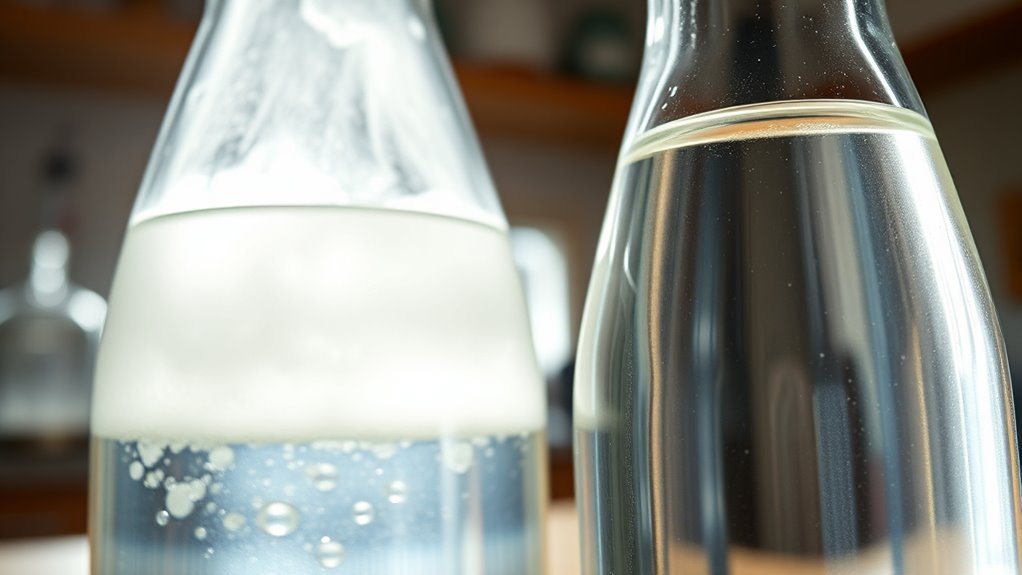
Boiled water isn’t the same as distilled water. While boiling kills most microorganisms, it doesn’t remove chemicals or minerals, leaving impurities behind. Distilled water, on the other hand, goes through a process that eliminates both biological contaminants and dissolved solids, resulting in a purer product. This makes distilled water ideal for sensitive applications, while boiled water is more suited for everyday consumption when microorganisms are a concern. Discover the differences in their applications and benefits.
Have you ever wondered whether boiled water is the same as distilled water? While both processes seem related, they yield considerably different results regarding purity, mineral content, and application. Understanding these distinctions can help you choose the right type of water for various uses.
Boiled water is produced by heating water to its boiling point. This process effectively kills most microorganisms, like bacteria and viruses, making it safe to drink. However, boiling doesn’t eliminate minerals or other impurities present in the source water. For instance, if your tap water contains calcium or magnesium, boiling won’t remove these minerals; they may even become slightly concentrated due to the evaporation of some water during boiling. Consequently, this mineral content remains the same, and you may still notice tastes and odors associated with those substances after boiling. Boiling does not purify water as effectively as distillation does, as it primarily targets microorganisms. In fact, boiling may leave behind harmful chemicals like lead or pesticides, which distillation removes.
Boiled water kills microorganisms but retains minerals and impurities, potentially affecting taste and odor.
On the other hand, distilled water undergoes a more complex purification process. The water is boiled, transforming it into steam, and then the steam is condensed back into liquid form. This process separates the water from its minerals, chemicals, and contaminants. The result is a highly purified product that’s fundamentally free of dissolved solids, including impurities that could affect its taste and safety.
Because distilled water lacks these minerals, it tends to be tasteless and odorless, making it ideal for applications where high purity is crucial.
Taste is another important aspect when differentiating boiled and distilled water. Boiled water retains the flavors associated with its mineral and chemical content, which can lead to a noticeable taste depending on the source. Distilled water’s neutrality makes it suitable for laboratory settings, medical use, or any scenario needing bland water, free from flavor influences. If you’ve tried both types, you may have noticed this preference for taste could influence your choice between them.
When it comes to safety, both boiling and distillation improve water quality, but distillation offers broader contaminant removal. Boiling effectively eliminates microorganisms but can’t remove chemical pollutants. Therefore, although boiled water is safe from biological threats, it may still contain harmful substances.
In contrast, distilled water has high purity levels, ensuring it’s free from pathogens and chemical impurities, making it safer for sensitive uses.
Conclusion
So, while you might think boiling water and distilling it are two peas in a pod, you’re in for a surprise. Boiling merely kills bacteria and removes some impurities, while distilling leaves you with pure H2O, free from minerals and contaminants. It’s ironic, isn’t it? You can boil away your worries, yet still be left with water that’s not as pristine as it could be. Sometimes, the simplest methods don’t yield the purest results—even in your kitchen.