5 Key Differences Between Coffee and Energy Drinks
Perplexed about choosing between coffee and energy drinks? Uncover the 5 key differences that could change your daily boost forever.
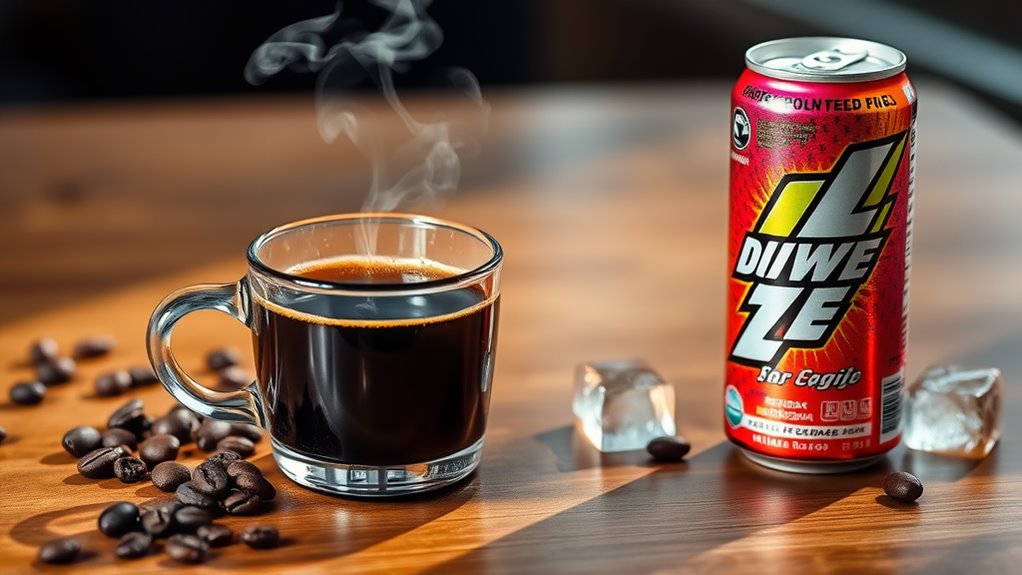
Coffee and energy drinks differ in several key areas. Coffee typically has less caffeine than some energy drinks, which can range up to 300 mg per serving. When it comes to sugar, plain black coffee has none, while many energy drinks pack in high amounts. Regarding energy duration, coffee provides steady alertness, whereas energy drinks can cause quick spikes followed by crashes. Finally, coffee is simpler in ingredients, while energy drinks often include various additives. Discover more as we explore these differences.
When it comes to choosing between coffee and energy drinks, understanding their key differences can help you make an informed decision that suits your lifestyle. Both beverages contain caffeine, but the amount can vary considerably. In an 8 oz cup of coffee, you'll typically find between 75-90 mg of caffeine, while energy drinks can range from 50 mg to a whopping 300 mg per serving. Some brands of energy drinks offer noticeably higher caffeine content than standard coffee, which might appeal to you if you're looking for a stronger caffeine kick.
However, keep in mind that the absorption rates of caffeine from both drinks are similar, so your body metabolizes them at comparable speeds.
The body metabolizes caffeine from both coffee and energy drinks at similar speeds.
When it comes to sugar and caloric content, coffee usually comes out on top if you're aiming for a low-calorie option. A plain cup of black coffee has virtually no sugar or calories unless you start adding milk or sweeteners. On the other hand, many energy drinks are loaded with sugar, which not only increases their caloric content but can also lead to sugar crashes after the initial energy surge. Additionally, Zavida coffees are calorie-and-sugar-free, making them an even healthier choice within the coffee category.
While some energy drinks are sugar-free, the high sugar content in others often makes them less favorable from a nutritional standpoint. If you're conscious about your sugar intake, you might want to stick with coffee or carefully choose your energy drink.
Regarding energy boost duration, coffee generally provides a moderate but prolonged energy boost, making it ideal for those long workdays or study sessions. You'll likely experience a steady level of alertness without the sudden drop that often follows a quick surge from an energy drink.
Energy drinks, in contrast, can give you that turbo boost of energy, but it's often followed by a crash, leaving you feeling drained. If you need sustained energy for daily routines, coffee is probably the better choice, while energy drinks can be useful for short-term, intense activities.
Health implications also differ between the two. Regular coffee consumption has been linked to various health benefits, including potential protective effects against certain diseases, largely due to its antioxidants.
Energy drinks, however, can pose risks, especially due to their high caffeine and sugar content, which may increase heart rate and blood pressure. It's worth noting that excessive consumption of either can lead to negative side effects like headaches or anxiety.
Lastly, consider the ingredient complexity. Coffee is straightforward, mainly consisting of caffeine and antioxidants, while energy drinks often contain a mix of caffeine, taurine, guarana, and B vitamins, which can complicate your decision.
Coffee allows for personalization, letting you customize it to your taste, whereas energy drinks come pre-formulated. In the end, weighing the caffeine content, sugar levels, energy duration, health implications, and ingredients will guide you in choosing the right beverage for your needs.
Conclusion
To sum up, while both coffee and energy drinks provide a caffeine boost, they differ greatly in ingredients, health effects, and consumption patterns. Some might argue that energy drinks offer a more convenient option, but the potential risks often outweigh the benefits. Coffee, with its rich antioxidants and lower sugar content, tends to be the healthier choice. Ultimately, understanding these differences helps you make an informed decision about what fuels your day and supports your well-being.