How Long Does a Dishwasher Take for Cycle Times?
On average, dishwasher cycle times vary widely; discover what influences these durations and find out which cycle is best for your needs.
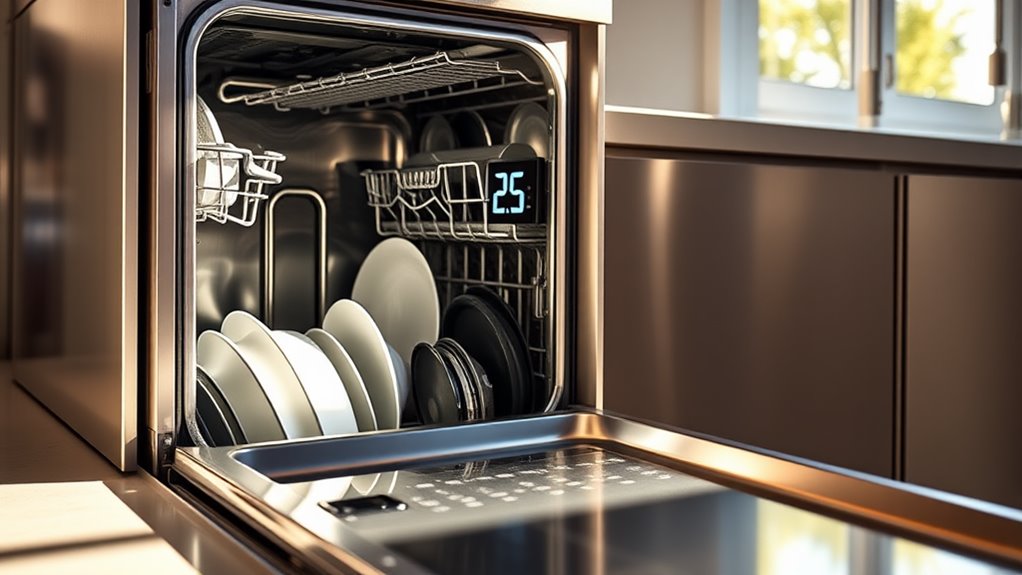
Dishwasher cycle times typically range from 1.5 to 4 hours, depending on the chosen wash cycle and factors like load size and soil level. Standard cycles last around 2 hours, while quick washes take about 1 hour for lightly soiled dishes. Heavy-duty cycles can extend to 3.5 hours for more stubborn grime. Additional elements, such as water temperature and detergent type, also play a role in the total cycle time. Discover more about how these factors affect performance.
When you load your dishwasher, it's vital to understand that cycle times can vary greatly based on several factors. Typically, dishwasher cycles range from 1.5 to 4 hours, influenced by the type of cycle you choose and the specific model you own. A standard wash cycle usually lasts around 2 hours, but various elements can extend or shorten this duration.
The type of cycle you select plays a notable role in determining how long it takes. For instance, a normal wash cycle generally lasts about 2.25 hours, making it suitable for your everyday loads. If you're in a hurry and only have lightly soiled dishes, the quick wash cycle might be your best bet, taking around 1 hour. On the other hand, if you need to clean heavily soiled items, expect a heavy-duty cycle to take between 2.75 and 3.5 hours. Additionally, a prewash cycle, which lasts about 6-8 minutes, can help loosen dried-on food before the main wash, adding minimal time to your overall cycle.
The cycle you choose significantly affects wash times, ranging from 1 hour for quick washes to over 3.5 hours for heavy-duty cleaning.
Several factors can influence the length of your dishwasher's cycle. Water temperature is a key player; higher temperatures can add 5-13 minutes to the overall cycle. Your dishwasher is likely equipped with soil level sensors that automatically adjust the cycle time based on how clean your dishes are. If you load larger amounts of dishes, expect longer cycles to guarantee everything is thoroughly cleaned. Different cycles may vary in length based on the features available in your specific model.
The type of detergent you use can also impact cycle times, as high-efficiency detergents may reduce the overall duration. Additionally, older models often have longer cycles compared to newer, more efficient versions.
When considering different brands, you'll find variability in cycle times. For example, Bosch models typically range from 100 to 140 minutes, while Whirlpool cycles are generally shorter, falling between 90 and 120 minutes. GE Profile offers cycles lasting from 100 to 130 minutes, and luxury brand Thermador's cycles range from 110 to 140 minutes. Maytag is known for innovative features that may also affect cycle times.
Energy and water usage are important aspects to keep in mind. Modern dishwashers consume about 3-4 gallons of water per cycle and typically use around 1200 watts of energy. Curiously, longer cycles can often lead to greater energy efficiency, as they allow for better cleaning while using less water overall. Choosing the right cycle can greatly impact your energy and water consumption, so make informed selections based on your needs.
Regular maintenance is essential for peak performance. Mineral buildup or hard water can cause longer cycle times, so regular cleaning and care are necessary. If you notice extended cycles despite proper maintenance, consult your user manual or seek professional assistance to troubleshoot any potential technical issues.
Conclusion
To conclude, understanding dishwasher cycle times can save you time and energy, much like the wise owl in Aesop's fables, who always knew when to act. Most cycles range from 30 minutes to two hours, depending on the settings you choose. Regular maintenance and ideal loading can enhance efficiency, ensuring those dirty dishes transform into sparkling clean plates in no time. So, next time you load up, remember: patience is key, and timing is everything.