What Are Water Calories and Do They Matter?
Curious about water calories and their impact on your health? Discover why hydration is crucial for your wellness journey.
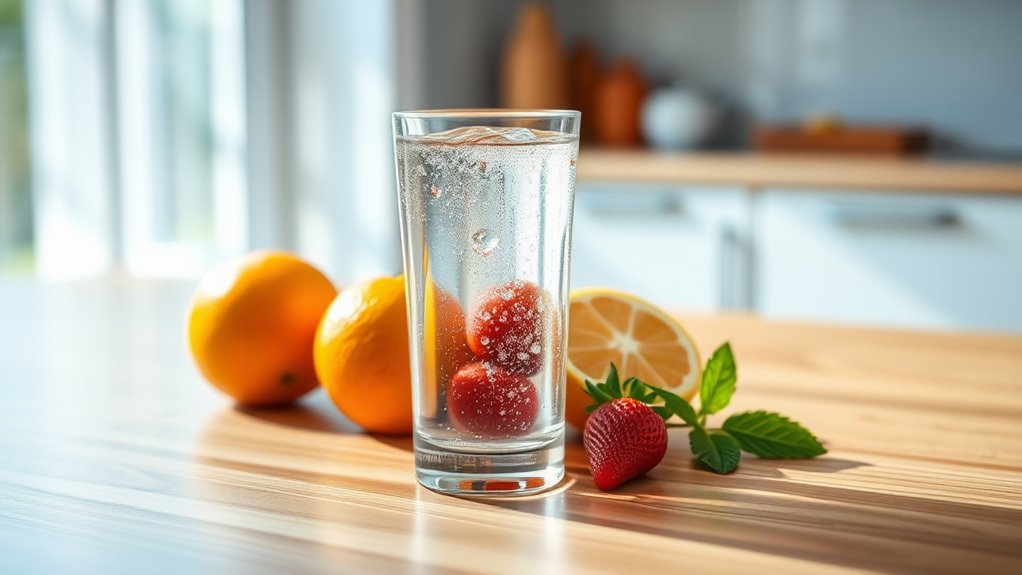
Water calories refer to the fact that plain water contains zero calories, making it essential for hydration and weight management. Choosing water over sugary drinks greatly lowers your caloric intake, which supports healthier eating habits. Staying properly hydrated can also enhance your metabolism and cognitive function, helping maintain energy levels. Remember, it's important to monitor flavored or enhanced waters for hidden calories. To discover more about the benefits of hydration, keep exploring the topic.
Water plays an imperative role in your overall health, yet it contains no calories, making it an ideal choice for hydration. Calories measure the energy in foods and drinks, typically counted in kilocalories (kcal). Since pure water lacks macronutrients like carbohydrates, proteins, and fats, it offers zero calories. This characteristic makes water a preferable option compared to sugary drinks, which can have high calorie content due to added sugars. By choosing water, you can stay hydrated without the extra calories that come from other beverages.
Different types of water, including tap, sparkling, and mineral water, are fundamentally calorie-free unless additives are present. Sparkling water, for example, remains calorie-free unless it's flavored or sweetened. Even mineral water, while it may contain beneficial minerals like calcium and magnesium, contributes minimal calories. Heat capacity of water is consistent across different types, ensuring that they remain a low-calorie choice.
However, be cautious with flavored waters, as they can contain a few to hundreds of calories depending on the added ingredients. Vitamin-enhanced waters and sports drinks often have significant calories due to sugars and other components, making them less favorable for calorie-conscious individuals.
Staying hydrated is essential for various body functions, such as temperature regulation and nutrient transport. Drinking adequate amounts of water supports your metabolic processes and can aid in weight management by reducing your overall caloric intake. When you choose water over high-calorie drinks, you naturally lower your caloric consumption, which can lead to healthier eating habits. This is particularly important if you're trying to manage your weight or improve your overall health.
Maintaining hydration also plays an important role in cognitive function. Even slight dehydration can impair your mental abilities, emphasizing the significance of consistent water intake. You may find that drinking enough water helps maintain your energy levels throughout the day, keeping you productive and focused.
Additionally, proper hydration can enhance your metabolism, potentially aiding in weight loss efforts. Dehydration can lead to various health issues, including fatigue and impaired cognitive function. When your body lacks sufficient water, you might experience decreased productivity and poorer physical performance.
By making a concerted effort to drink enough water each day, you can help guarantee ideal hydration levels, which is critical for both physical and mental health. Ultimately, the impact of water on your health is significant, not only regarding hydration but also concerning your overall caloric intake.
Conclusion
In principle, water calories, while a fascinating concept, don't hold much weight in the grand scheme of your diet. Since water contains no calories, it can't contribute to your energy intake. Staying hydrated is essential for your overall health, but it won't impact your calorie count. So, focus on balancing your nutrition and enjoying water for its benefits, not as a calorie source. After all, the truth lies in the fact that hydration is important, yet calorie-free.