What Does Soursop Taste Like and What Makes Its Flavor Unique
Keen to discover the tantalizing taste of soursop? Its unique flavor blend holds unexpected surprises that will leave your taste buds craving more.
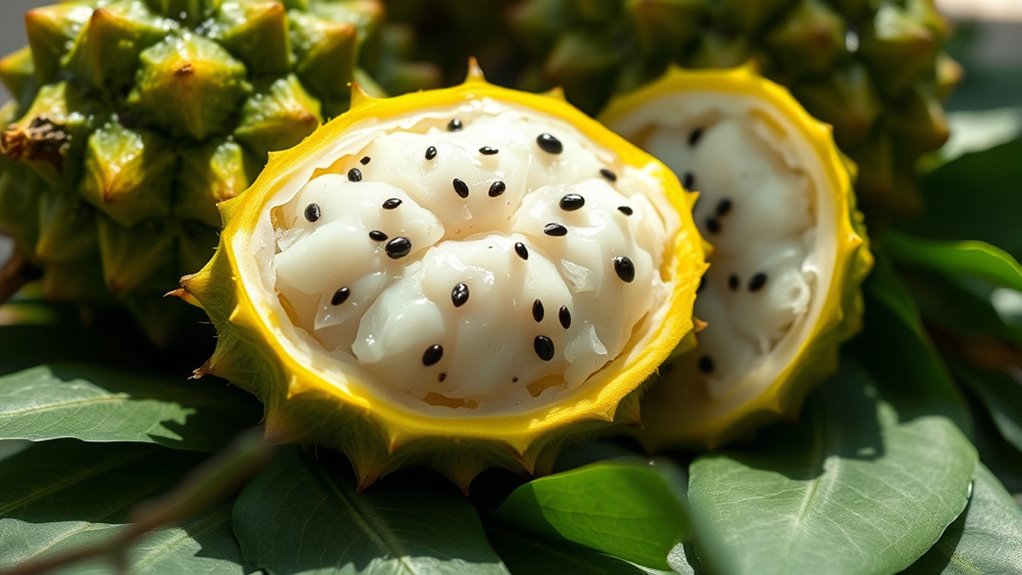
Soursop offers a delightful blend of sweet and sour, reminiscent of a juicy mix between pineapple and strawberry. You’ll also notice subtle hints of banana, mango, and coconut that add to its intriguing flavor. The creamy texture makes each bite a luxurious experience, while its floral aroma transports you to tropical locales. This fruit shines in smoothies and desserts, perfect for any occasion. Keep exploring, and you might just uncover more about its culinary magic.
Soursop, with its fascinating blend of flavors, is a tropical gem that promises a delightful taste experience. As you immerse yourself in the world of this exotic fruit, expect to encounter a harmonious union of sweet and sour notes that tantalize your palate.
It’s often likened to a vibrant mix of pineapple and strawberry, but you might also perceive hints of banana, mango, and coconut, giving it a complex flavor profile that’s hard to resist. The first whiff of soursop reveals a floral aroma, reminiscent of the tropics, which amps up the anticipation for what’s to come.
Soursop offers a tantalizing fusion of pineapple and strawberry, with delightful hints of banana and mango, all wrapped in a floral tropical aroma.
When you first slice open a ripe soursop, you’ll be greeted by its creamy, soft flesh that feels luxuriously smooth, similar to banana. This unique texture, coupled with stringy fibers, adds an intriguing mouthfeel that elevates each bite.
Take a moment to relish the juicy and succulent pulp, which emits a milky, creamy juice that practically invites you to scoop it out. Don’t worry—the membranes inside break apart effortlessly, making it easy to indulge in the sweet treat.
Just be aware that unripe soursop tends to be firm and boasts a potato-like texture, with a decidedly more sour taste that may not have the same appeal as the succulent ripe version.
Timing is everything when it comes to enjoying soursop at its best. An immature soursop reveals a dark green hue, firm to the touch, signaling it’s not quite ready for consumption.
As it ripens, the color transforms to a yellow-green, becoming softer and more inviting. You’ll start to notice brown spots appearing as it reaches peak ripeness—this is your cue to enjoy it! The sweet spot for flavor and texture typically occurs about four to five days post-harvest, with an ideal consumption window stretching for just two days after it has fully ripened. The soursop tree thrives in warm climates with nutrient-rich soil, providing optimal conditions for fruit development.
While soursop finds its way into various culinary creations like smoothies, jellies, and ice creams, it shines best in tropical beverages and desserts. Interestingly, Soursop fruit is commonly used in regions where it is grown to create refreshing drinks and desserts.
In the Caribbean, for instance, it’s transformed into a rejuvenating champola de guanábana. You can eat its luscious flesh plain or blend it into a drink, but its sweet-tart profile typically limits its use in savory dishes.
The sensory experience extends beyond flavor; the sweet, pineapple-like scent intensifies as soursop ripens, creating an enthralling aroma. This sweet invite pairs wonderfully with the fruit’s rich taste, creating a delightful sensory interplay.
Even though some flavor variations exist depending on the cultivar and geographical origin, you’ll always discover the undercurrent of muskiness and freshness that defines this tropical marvel.
Conclusion
In the world of fruits, soursop stands out like a hidden gem waiting to be discovered. Its unique blend of sweet and tangy flavors dances on your palate, reminiscent of a tropical paradise. You can’t help but be enchanted by its creamy texture and aromatic essence that lingers long after the last bite. So, if you’re craving an adventure for your taste buds, don’t miss the chance to indulge in this exotic delight—it just might captivate your senses!