How Many Oz Are in a Liter
What’s the secret behind converting liters to ounces easily? Discover the essential math you need to enhance your cooking and fluid tracking skills!
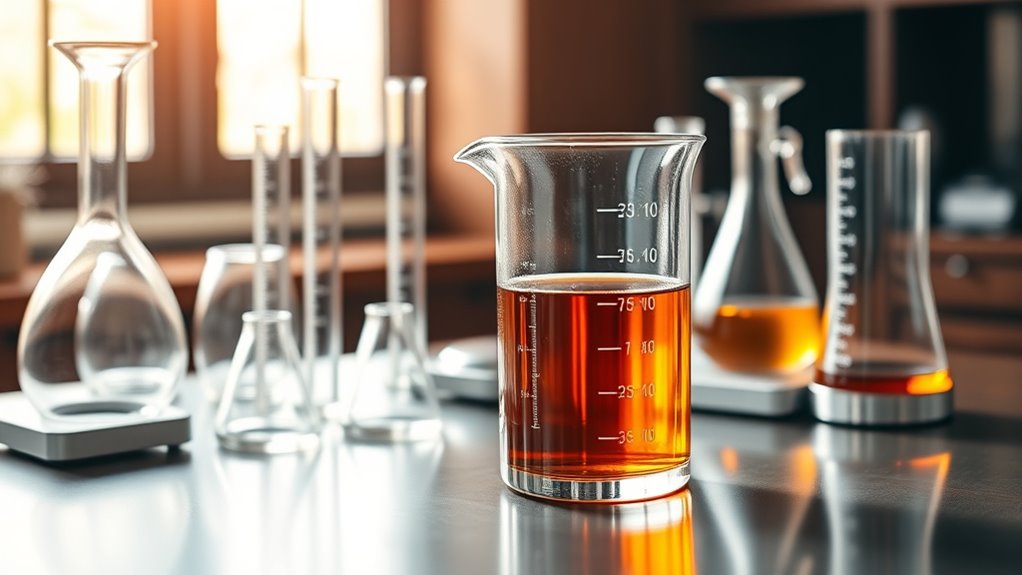
There are approximately 33.814 fluid ounces in a liter. This means if you want to convert liters to ounces, you can simply multiply the number of liters by 33.814. It’s useful to remember that 1 fluid ounce equals about 0.02957 liters, allowing you to easily switch between these measurements. Having this knowledge is essential, especially in cooking or when tracking fluid intake. Stick around, and you’ll discover even more helpful conversion tips!
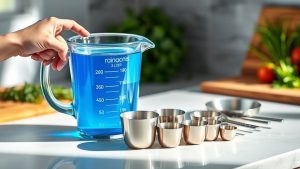
Have you ever wondered how many ounces are in a liter? Understanding this conversion can be handy, especially when you’re measuring liquids for cooking, baking, or tracking your hydration. In the United States, 1 liter is roughly equivalent to 33.814 fluid ounces. Conversely, if you need to convert ounces to liters, you can use the formula where liters equal ounces multiplied by 0.0295735. This precise relationship helps you accurately convert between the two measurements, ensuring you’re using the right amounts in your recipes or other applications. It’s also useful to remember that 1 liter equals 1000 milliliters, which further aids in various conversions.
Understanding the conversion between liters and ounces is essential for accurate measurements in cooking and hydration tracking.
It’s essential to note that the US fluid ounce differs slightly from the imperial fluid ounce. A US fluid ounce is about 29.5735 milliliters, whereas an imperial fluid ounce is approximately 28.4 milliliters. That means if you’re working with recipes or measurements from the UK or other countries that use imperial units, you’ll need to be cautious to avoid any discrepancies. Keeping track of which system you’re using will help you achieve the best results, particularly in fields like cooking, where precision is fundamental.
Fluid ounce-to-liter conversion is common in many contexts beyond the kitchen. The beverage industry frequently uses these conversions to indicate bottle sizes and serving specifications. When you’re deciding between different drinks at the store, understanding these measurements can help you choose a beverage that suits your needs. Additionally, in the medical and pharmaceutical fields, professionals often calculate liquid dosages using these conversions, making them critical for safe and accurate treatment plans.
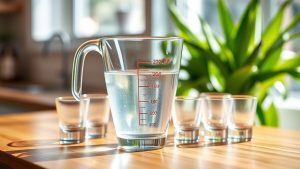
If quick reference tables help you, you’ll appreciate knowing that 1 fluid ounce equals 0.02957 liters. For larger quantities: 5 fluid ounces equal about 0.14787 liters; 16 fluid ounces are around 0.473 liters; and 32 fluid ounces come to approximately 0.946 liters. On the other hand, to convert liters to fluid ounces, 0.5 liters equals about 16.907 fluid ounces. Having these conversions at your fingertips can simplify calculations, whether you’re in the kitchen or the pharmacy.
In your daily routine, using rough approximations can sometimes make life easier. For quick mental calculations, round 1 fluid ounce to about 0.03 liters. Or remember that approximately 1 liter equals 34 fluid ounces for less precision-demanding situations, such as hydration goals. However, for accuracy, it’s best to use a calculator or reference table that employs the exact conversion factor, especially in cooking or scientific contexts.
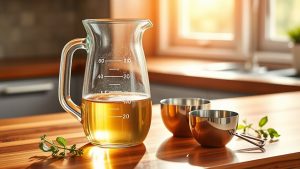
Finally, remember that when it comes to chemical conversions or when measuring substances other than water, density plays a fundamental role. The formula considering density is ounces multiplied by 0.0283495 divided by the substance’s density in grams per cubic centimeter. If you’re measuring pure water, its density is 1 g/cm³, which makes the conversion straightforward. By keeping these points in mind, you’ll navigate the world of ounces and liters with confidence and precision.
Conclusion
In case you were wondering, a liter holds about 33.8 ounces! It’s funny how we often think of measurements regarding ‘bigger’ or ‘smaller,’ but at the end of the day, whether it’s liters or ounces, it all comes down to how thirsty you feel. So next time you grab that bottle, remember—it’s not just about the size; it’s about satisfying your thirst. Enjoy your drink, and leave the math for another day!