What Is Guayaba in English?
Journey into the world of guava, a tropical fruit bursting with flavor and health benefits that you won’t want to miss!
Guayaba, known as guava in English, is a tropical delight you’ll want to try. This fruit has a vibrant exterior, ranging from green to sunny yellow or maroon when ripe. When you bite into its juicy flesh, you’ll experience a unique blend of sweetness and zesty acidity, reminiscent of pear and strawberry. Packed with vitamins and antioxidants, guava is not just tasty but nutritious too. Stick around to discover more about its various uses and benefits!
Guayaba, known in English as guava, is a fascinating tropical fruit that captivates with its unique flavor and delightful aroma. Botanically classified as *Psidium guajava*, this small tree or shrub belongs to the Myrtaceae family and thrives in tropical and subtropical climates worldwide. You may find it referred to as Common Guava, Red Guava, or even Lemon Guava in various regions, highlighting its appeal and adaptability. Whichever name you use, one thing’s for sure: guava is a fruit worthy of your attention.
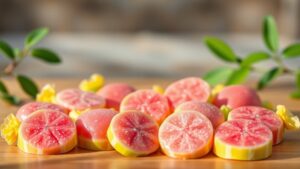
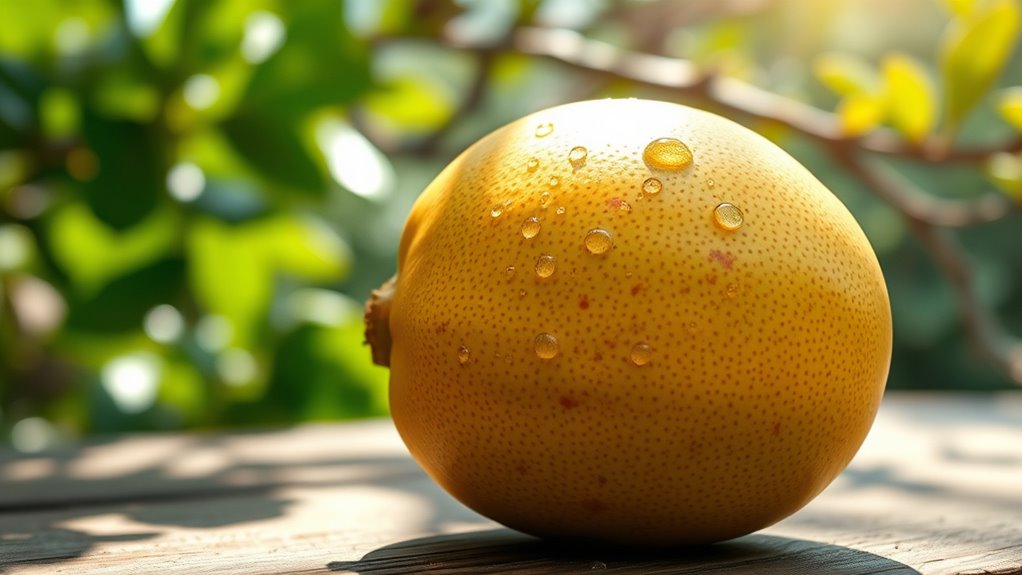
Visually, guavas can be enchanting. They typically range in fruit size from 4 to 12 centimeters long, coming in shapes that are either round or oval. Their outer skin displays a mesmerizing spectrum of colors, from vivid green to sunny yellow, and sometimes even maroon when they’re fully ripe. Depending on the cultivar, the surface may be semi-smooth or rough. The fruit’s flesh can range from bright white to deep pink or salmon-red, but regardless of the variety, the interior is always invitingly juicy.
Guavas are visually enchanting, showcasing vibrant colors and invitingly juicy flesh, ranging from white to deep pink.
When it comes to flavor, guava offers an intriguing blend that resembles pear, quince, fig, and strawberry, accented with subtle citrus notes. Depending on the ripeness, it can be sweet or contain a rejuvenating acidity. The fragrance, reminiscent of lemon rind but less sharp, is another aspect that makes guavas so delightful. As they reach maturity, ripe guavas emit a musky, honeyed scent that’s almost impossible to resist. Some cultivars boast a strong aroma while others present a gentler, more inviting scent, appealing to your senses long before the first bite.
Inside the sweet flesh, you’ll find many small brown seeds, which vary in quantity and hardness depending on the specific cultivar. In wild forms, seeds are more abundant, whereas cultivated varieties tend to have fewer. Not only are these seeds edible, but they also provide a great source of dietary fiber, making them a healthy addition to your snacking. The pulp is grainy yet succulent when perfectly ripened, inviting you to savor each mouthful.
Selecting the right guava is essential to fully appreciate this tropical treasure. A ripe guava typically shifts from bright green to a lovely yellowish-green or pale yellow with a slight blush. When you give it a gentle squeeze and feel slight softness, along with a sweet fruity aroma near the stem, you know you’ve found something special.
The maturation process takes about 90 to 150 days post-flowering, transforming the fruit as it ripens, moving from green to yellow-orange over time. Guava trees can yield anywhere from 50 to 80 lbs per tree per year, especially when properly cared for with pruning. The best propagation methods for improved varieties involve veneer grafting with vigorous young rootstock to ensure vigorous growth and production.
Nutritionally, guavas are powerhouse fruits rich in vitamins A, B, and C, providing essential immune and overall health support. They’re loaded with antioxidants, fiber, and potassium, all fantastic for promoting healthy digestion and cardiovascular health.
Enjoy fresh guavas raw, sliced, or processed into jams, jellies, and pastries. Their versatility stretches even further into savory dishes, making them a delightful option for both sweet and tangy culinary creations. Guayaba is truly a gem, waiting to add its unique charm to your palate.
Conclusion
To summarize, guayaba, often called guava, is a delightful fruit bursting with flavor and health benefits. This gorgeous green or yellow gem can brighten up your breakfast or tantalize your taste buds in tasty treats. With its sweet, succulent taste and vibrant aroma, guayaba’s versatility makes it a favorite in juices, desserts, and dishes around the world. So, next time you spot this wonderfully juicy fruit, don’t hesitate to indulge in its mouthwatering magic!