How to Convert 2 Liters to Ounces for Easy Measurement
I can show you the simple formula to convert 2 liters to ounces, but there’s more to mastering liquid measurements than just numbers.
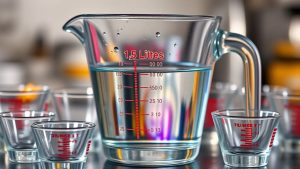
To convert 2 liters to ounces, just multiply your liters by 33.814. So, for 2 liters, that's 2 × 33.814, which equals about 67.628 US fluid ounces. This conversion is essential for accurate cooking and ensuring you meet hydration goals. Remember, fluid ounces measure volume, not weight, so it's important to keep that in mind when measuring liquids. If you want to know more specifics about conversions, keep exploring further!
When you need to convert 2 liters to ounces, understanding the conversion factor is vital. The basic conversion you'll rely on is that 1 liter is approximately equal to 33.814 US fluid ounces. This means that to convert liters to ounces, you multiply the number of liters by 33.814. In your case, for 2 liters, you can simply perform the calculation: 2 liters × 33.814 ounces/liter, which equals about 67.628 US fluid ounces. This precise conversion is significant, especially in contexts like cooking or baking, where accuracy can impact the quality of your dish.
Converting 2 liters to ounces requires multiplying by 33.814, yielding about 67.628 US fluid ounces—crucial for precise cooking.
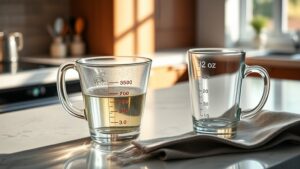
It's important to recognize that there are differences between fluid ounces, which measure volume, and dry ounces, which measure weight. Since you're dealing with liquids, fluid ounces are your focus. When working with liquids like water or oil, using fluid ounces guarantees you're measuring the volume correctly. If you were to confuse dry ounces with fluid ounces, you'd end up with inaccurate measurements, impacting your recipes or hydration goals.
In practical terms, knowing how to convert 2 liters to ounces can be incredibly helpful in various scenarios. For instance, if you're following a recipe that lists ingredients in ounces but your measuring container uses liters, this conversion allows you to adapt your measurements. Similarly, if you're tracking your water intake for health reasons, understanding how many ounces are in 2 liters simplifies reaching your hydration goals. Accurate liquid measurement conversions can also enhance your overall cooking experience.
If you find manual calculations cumbersome, there are convenient tools available. Online converters can quickly provide the answer without needing to do the math yourself. You could also use mobile apps designed for unit conversions, which can be particularly handy when you're on the go or in the middle of cooking. These resources guarantee that you can always get accurate measurements, whether you're in the kitchen or managing your daily intake.
When discussing conversions, it's worth noting the distinction between US and UK fluid ounces. The US fluid ounce is approximately 29.5735 mL, while the UK fluid ounce is around 28.4131 mL. If you're following a recipe from the UK, it's significant to adjust your conversions accordingly. This understanding avoids confusion and guarantees you're putting the right amounts into your dishes.
Lastly, always keep in mind that precision matters. In scientific settings, for example, accurate measurements can be the difference between a successful experiment and failure. Whether you're cooking, baking, or conducting research, knowing how to convert 2 liters to ounces and understanding the implications of those conversions is vital. With the right tools and knowledge, you can navigate these measurements with confidence, guaranteeing that every recipe or project you undertake turns out just as intended.
Conclusion
To summarize, converting 2 liters to ounces isn't just a simple switch; it's a savvy step towards seamless measurements. With the right ratio, you can effortlessly estimate and execute your culinary creations. Remember, one liter equals about 33.8 ounces, so you'll find that 2 liters translates to approximately 67.6 ounces. This knowledge not only enhances your cooking confidence but also guarantees that your recipes shine with precision and perfection. Happy measuring!