7 Simple Steps for Removing Your Dishwasher Filter
Transform your dishwasher’s performance with these 7 simple steps for removing your filter—discover the secrets to a cleaner, more efficient appliance!
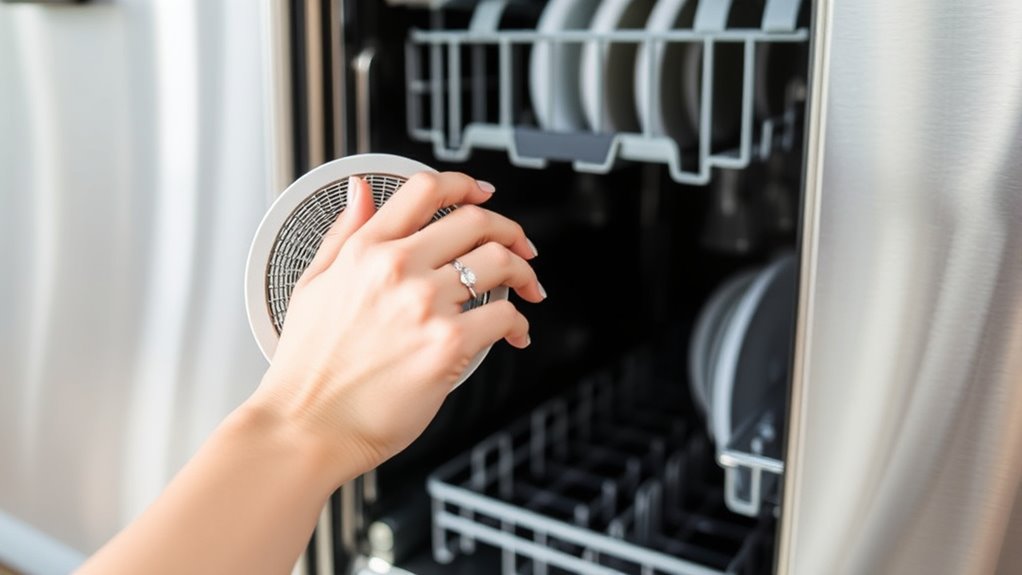
To remove your dishwasher filter, first, gather warm water, dish soap, a soft brush, and towels. Access the filter at the bottom by removing the lower dish rack. Detach the upper filter with a quarter turn and pull the lower filter straight up. Rinse both filters under warm water, scrub with a brush, and check for damage. Reinstall them securely, ensuring everything is flush. Maintain a regular cleaning schedule for peak performance—more tips are just ahead!
Gather the Necessary Materials
Before you begin cleaning your dishwasher filter, it’s essential to gather the necessary materials. You’ll need warm water to rinse away debris and loosen stuck-on food particles. A sink or basin will provide a controlled space for this task. Grab some dish soap to break down grease and stubborn residue effectively. For gentle scrubbing, use a soft brush, sponge, or an old toothbrush, avoiding any wire brushes that might damage the filter. Towels or a drying rack are important for drying the filter afterward. Regularly cleaning the dishwasher filter is key to preventing cloudy glassware and keeping your dishes sparkling. Make sure you have these supplies within reach to streamline the process, and consider reviewing your dishwasher’s manual for any specific cleaning recommendations related to your model.
Access the Dishwasher Filter
To access the dishwasher filter, start by locating it at the bottom of the dishwasher tub, often found in a back corner or around the base of the bottom spray arm.
First, remove the lower dish rack to clear the space and provide easy access to the filter assembly.
Once the rack is out, you should see the filter, which may appear as a plastic cylinder or a mesh plate.
Look for arrows or markings indicating how to release or twist the filter for removal. Additionally, be aware that cleaning the filter regularly can help maintain optimal dishwasher performance.
Detach the Filter Components
Detach the filter components by first releasing the upper filter assembly, usually secured by a quarter turn mechanism.
Rotate it gently in the designated direction—clockwise or counterclockwise—depending on your model. Avoid applying excessive force to prevent any damage. Once liberated, lift the upper filter straight out to fully remove it.
Rotate the filter gently in the correct direction to avoid damage, then lift it straight out for complete removal.
Next, remove the lower filter, which typically isn’t secured. Firmly grip the circular lip and pull it straight up or slightly forward, adjusting as needed to clear any tabs or guides.
Be mindful of any additional mesh screens or filters beneath the primary ones, as some models may include them. Inspect all components for wear, ensuring they’re ready for reinstallation after cleaning.
Clean the Filter Thoroughly
With the filter components removed, it’s time to clean them thoroughly. Start by rinsing the filter with warm water, as this effectively removes most soils and loose food particles.
For tougher debris, soak the filter in warm water for several minutes. Use a soft-bristled toothbrush or sponge to gently scrub away any stuck-on food and calcium deposits, avoiding harsh materials that could damage the filter.
For deep cleaning, soak the filter in a mixture of white vinegar and warm water for 15 to 30 minutes, then follow with gentle scrubbing.
After rinsing, check for any residual grease or mildew, using paper towels or soft cloths to wipe clean. This thorough cleaning maintains filter efficiency and enhances your dishwasher’s performance.
Inspect for Damage
Inspecting your dishwasher filter for damage is crucial to maintaining its efficiency and overall performance.
First, examine the filter mesh for tears or holes that may compromise its filtering capability. Check for cracks in the frame and guarantee locking tabs aren’t bent or broken. Look for corrosion or mineral buildup that could weaken the structure over time.
Examine the filter mesh for tears or holes, check for frame cracks, and ensure locking tabs are intact and undamaged.
Use a flashlight and magnifying glass for a closer inspection of hidden damages. Test the filter’s flexibility by applying gentle pressure, noting any brittleness. Verify that the filter fits securely without gaps that could allow large particles to pass through.
If you find significant damage, such as cracks or warping, replace the filter to avoid further issues with your dishwasher.
Reinstall the Filter Properly
After confirming your dishwasher filter is free from damage, focus on reinstalling it correctly for maximum performance.
Start by placing the lower filter under the tabs at the bottom of the tub. Then, align the upper filter with the round opening and make sure the curved opening fits into the pump base slot. Lock it into position by turning it clockwise until you feel a noticeable drop.
If the filter rotates freely, continue turning until it doesn’t. Confirm both filters sit flush and locked, and check that the spray arm clicks into place.
Finally, replace the lower dish rack and inspect visually to confirm everything is correctly seated before operating the dishwasher.
Maintain Regular Cleaning Schedule
Maintaining a regular cleaning schedule for your dishwasher filter is essential for ideal performance and longevity. For heavy use of 13-14 loads weekly without pre-rinsing, clean the filter weekly.
If you use your dishwasher moderately (8-14 loads, scraping only), inspect every three months. Light users (1-7 loads, pre-washing) should clean once a year. Always inspect the filter monthly, regardless of usage patterns.
Implementing proper pre-loading techniques can greatly extend these intervals; a full wash before loading may allow for annual cleaning even with heavier loads.
Be vigilant for warning signs, such as food remnants on dishes or unpleasant odors, which indicate immediate cleaning needs. Regular maintenance prevents debris buildup, ensuring your dishwasher operates efficiently for years.
Conclusion
By following these seven simple steps, you can keep your dishwasher filter in top shape, ensuring your appliance runs like a well-oiled machine. Regular maintenance not only boosts performance but can also prevent costly repairs down the line. So, don’t let a clogged filter hinder your clean dish dreams—make filter cleaning a routine! Invest a little time now, and you’ll reap the benefits of sparkling dishes for what feels like an eternity.