Convert 3 Liters to Ounces: A Quick How-To Guide
Overflowing with useful tips, this guide reveals how to convert 3 liters to ounces effortlessly—discover the essential methods and nuances!
To convert 3 liters to ounces, just multiply by 33.814. This means you’ll get about 101.44 fluid ounces in the U.S. customary system. It’s a quick and simple math operation! Knowing this conversion helps with recipe adjustments, understanding beverage sizes, and tracking your hydration. Remember, the UK system is different, so make sure to clarify which measurement you need. Stick around, and you’ll discover more tips on making fluid conversions effortless.
When you need to convert liters to ounces, understanding the conversion factor is fundamental. In the U.S., one liter equals 33.814 fluid ounces. This means that when you want to convert any number of liters to ounces, you just multiply the liters by 33.814. It’s a straightforward calculation, and knowing this conversion factor can save you from confusion, whether you’re cooking, hydrating, or involved in scientific measurements.
If you’re specifically looking to convert 3 liters to ounces, the math is simple. You multiply 3 liters by 33.814 fluid ounces per liter. Doing the math gives you 101.442 fluid ounces. For everyday use, you might round this value to approximately 101.44 fl oz or just 101 fl oz. Understanding this process guarantees you’re accurately measuring liquids, especially important in culinary applications where precise volume matters.
Be aware that the conversion factor applies specifically to U.S. customary fluid ounces. The UK (Imperial) system differs slightly; one liter in the UK equals 35.195 fluid ounces. So, for 3 liters, that would be about 105.585 fl oz in the Imperial system. If you’re working with recipes or measurements that stem from either the U.S. or UK, it’s vital to know which conversion to use to avoid potential mishaps in your cooking or measurements.
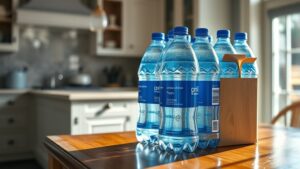
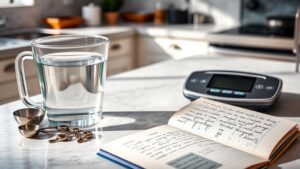
Practically, converting 3 liters to ounces can be incredibly useful. If you’re tackling large recipes that list ingredients in liters, converting to ounces simplifies the process. It helps when you’re looking at beverage containers that use different measurement systems, making sure you know exactly how much liquid you’re dealing with. This kind of knowledge is especially beneficial when you’re monitoring hydration, where fluid ounces are commonplace in guidance and recommendations.
To perform this conversion, follow a simple, step-by-step process. First, identify the volume you want to convert—in this case, 3 liters. Next, multiply that by 33.814 to find your answer in fluid ounces. It only takes a few seconds, and you can easily remember that value or refer to some handy conversion tables for quick reference. Knowing how to quickly convert liters to ounces is an essential skill for anyone working with liquid measurements.
Conversion tables are particularly helpful. For instance, you might remember that 1 liter translates to 33.814 fl oz, 2 liters equals 67.628 fl oz, and so on, leading right to 3 liters at 101.442 fl oz. Such tables make information accessible, allowing you to convert various common volumes without stress. Additionally, fluid ounces are smaller than liters, so always consider the appropriate context when measuring.
Finally, keep in mind some common misconceptions. Fluid ounces measure volume, not weight. Just because an ounce of weight doesn’t equal a fluid ounce volume doesn’t mean you can’t confidently convert between liters and fluid ounces with the right factors. Always check whether your measurements stem from U.S. or UK contexts for accuracy.
When you have a solid grasp of these conversion elements, you’ll manage liquids in any setting effortlessly.
Conclusion
Converting 3 liters to ounces is as easy as pie! With just a simple multiplication, you discover that 3 liters equals about 101.44 ounces. Whether you’re measuring for a recipe or keeping track of your hydration, this quick conversion helps you get it right every time. Now you can confidently switch between measurements and impress your friends with your newfound knowledge. So, grab that measuring cup and make your next cooking adventure a breeze!