What Does 8 Oz Water Mean?
The term “8 oz of water” signifies an important measurement that influences both cooking and hydration, but what does it truly entail?
8 oz of water means exactly 1 cup, a vital measurement for both cooking and hydration. In fluid ounces, this amount equals 236 milliliters, and it’s essential for maintaining accurate recipes and daily water intake. This measurement is standardized, so you can easily track your hydration by aiming for eight 8 oz glasses a day. Gaining a better understanding of these measurements will help you navigate cooking and hydration needs with confidence.
When you hear “8 oz of water,” think of it as exactly 1 cup, a standard measurement in cooking and hydration practices. This measurement corresponds to 8 fluid ounces, which is a volume measurement specifically for liquids. It’s important to understand that when you’re measuring fluids, “oz” refers to fluid ounces, not weight ounces. For example, 8 oz of water equals roughly 236 milliliters, and this equivalency is unique to water due to its density.
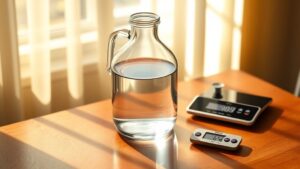
One of the fascinating aspects of measuring water is that its volume in fluid ounces is equal to its weight in ounces—so 8 fl oz also weighs approximately 8 oz. This isn’t the case for every liquid, as substances like honey, which is denser, will weigh more than the same volume of water, whereas oils, which are lighter, will weigh less. Hence, when you’re measuring different liquids, it’s essential to recognize the distinction between volume and weight for accurate recipes and hydration tracking. Additionally, measuring by weight is often quicker and more accurate than using volume measurements.
Measuring liquids requires understanding that volume and weight differ across substances, impacting cooking and hydration accuracy.
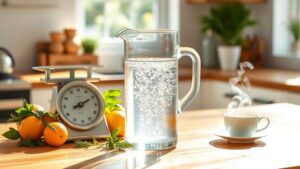
In cooking, 8 oz serves as a foundational unit. Since 8 ounces equals 1 cup, it also translates to 16 tablespoons, making it easy to follow recipes. However, it’s important to remember that this volume-to-weight conversion doesn’t hold true for dry ingredients. For instance, when measuring flour or sugar, you often need a kitchen scale for precise weight, as 1 cup doesn’t equate to 8 ounces by weight. 8 ounces of all-purpose flour equals approximately 2 cups, illustrating how dry ingredients differ in measurement.
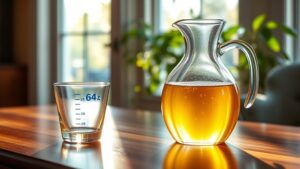
Commonly, 8 oz or 1 cup is a standard serving size for many beverages, including water. In everyday life, you might fill a coffee mug that typically holds about 12 oz, which is larger than 8 oz. Understanding that standard serving sizes often use 8 oz helps you track hydration throughout the day. For instance, if you’re aiming for the recommended daily intake of 64 oz, you’d need to consume eight 8 oz glasses. This kind of practical knowledge is especially useful when planning diets or monitoring water intake.
Converting 8 oz of water into other units can be helpful in various situations. You may find yourself needing to know that 8 oz equals about 226.8 grams when considering weight. When it comes to liters, 1 liter equals approximately 33.814 fluid ounces—thus, you get about 4.22 servings of 8 oz from a liter. Although countries might use different measurement systems, cups remain universally understood.
The scientific value of accurately measuring 8 oz of water extends into nutrition and hydration. It’s frequently referenced in health guidelines, emphasizing the importance of daily water intake. Monitoring can be simplified by utilizing this specific measurement, ensuring you meet your hydration goals efficiently.
With this clarity, you can confidently navigate cooking, health, and experimental settings by relying on the standard unit of 8 oz for water, providing a solid framework for your daily needs. Understanding just what “8 oz of water” means positions you to make informed choices about hydration and food preparation.
Conclusion
In conclusion, understanding what 8 oz of water means is essential for maintaining proper hydration. It equates to about one cup, a manageable amount that can easily fit into your daily routine. Remember, “a drop in the bucket” doesn’t mean insignificant; every bit of water contributes to your health. By integrating this knowledge into your everyday life, you can make certain you’re drinking enough to support your body’s needs effectively. Stay mindful, and your body will thank you!