10 Tips to Taste Tea Like a Professional Sommelier
Master the art of tea tasting with expert tips that will elevate your experience to new heights—uncover secrets beyond the brew.
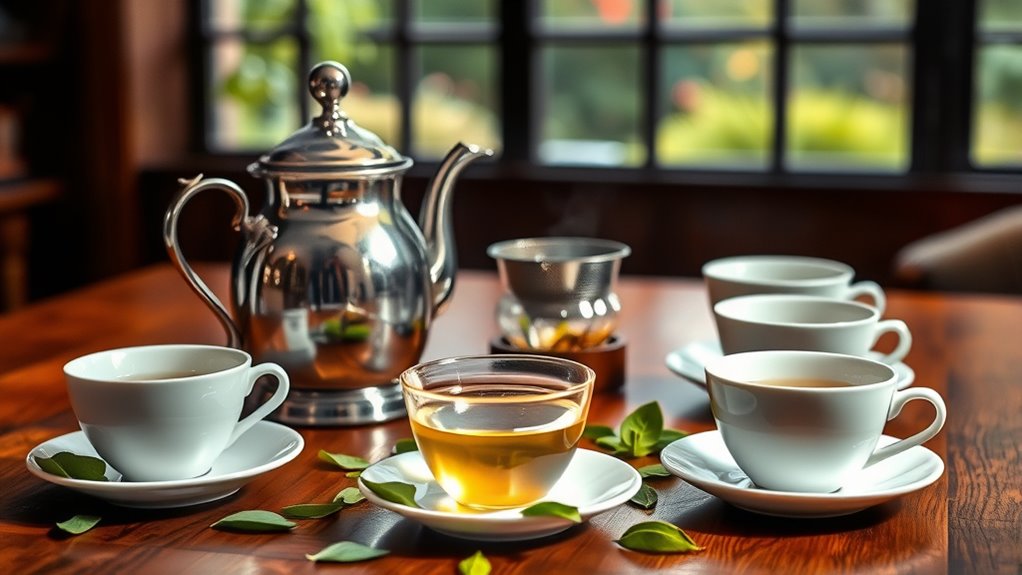
To taste tea like a pro, start by choosing high-quality loose leaves and look for freshness in aroma and color. Master your water temperature—each tea type has its ideal heat. Stick to standardized tea-to-water ratios for consistency. Inspect the dry leaves for aroma and evaluate the liquor’s appearance for vibrancy. Pay close attention to flavors and aftertastes. Create an inviting environment to enhance your experience, and there’s much more to discover for elevating your tea tasting skills.
Choose Quality Loose Leaf Tea
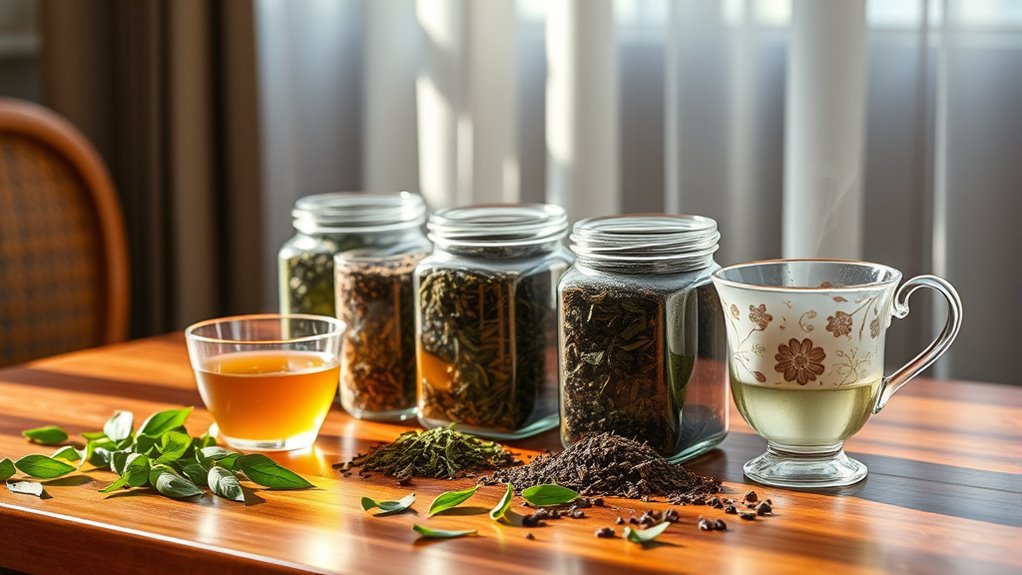
When you choose quality loose leaf tea, you’re not just selecting a beverage; you’re starting on a sensory journey that unfolds with every sip.
Look for whole, unbroken leaves—these often indicate superior quality. Consistent size and vibrant color show you’ve got fresh, well-stored tea. The texture should feel light and smooth, a tactile difference that separates the best from mediocre varieties.
When you first open the container, inhale the strong, distinct aroma; it should transport you immediately. Each type, whether malty black or grassy green, reveals its authenticity through its scent. Quality tea often allows for multiple infusions, enhancing the experience with richer flavors.
Whole leaves release their essential oils beautifully during steeping, creating a complex flavor profile that lingers, making every cup a delight to savor.
Pay Attention to Freshness
Though it might seem subtle, the freshness of your tea profoundly impacts its taste and overall experience.
When you assess dry leaves, let their aroma capture your attention; fresh green tea should burst with grassy, vibrant scents, while white tea offers delicate floral notes that hint at quality.
As you brew your tea, observe the infusion’s color—high-quality varieties shine bright and clear, signifying proper processing.
Explore the mouthfeel; a well-balanced texture remains crisp and lively over multiple infusions.
Finally, savor the aftertaste: fresh teas evolve delightfully, revealing sweet or floral nuances. If it fades quickly, you’ve likely encountered aged or improperly stored leaves.
Embrace freshness, as it’s your gateway to a truly exceptional tea experience!
Master Water Temperature
Water temperature plays an essential role in tea brewing, directly influencing the extraction of flavors and aromas.
For black tea, you’ll want water close to boiling, around 212°F (100°C), to fully release its bold, robust profile. Conversely, green and white teas thrive at cooler temperatures between 140°F and 185°F (60°C to 85°C) to preserve their delicate, grassy notes.
Oolong, resting in the middle, calls for 175°F to 195°F (80°C to 90°C) to balance its floral and creamy characteristics. Herbal teas can handle boiling water, extracting vibrant flavors effortlessly.
Monitoring temperature with a thermometer or an electric kettle guarantees you avoid bitterness and savor the true essence of each tea type. Master this, and you’ll elevate your tea experience dramatically!
Use Standardized Tea-to-Water Ratios
Getting the right tea-to-water ratio is essential for brewing the perfect cup, and the industry standard of two grams of tea per eight ounces of water is your best friend.
This ratio works magic across all tea types, from robust black to delicate white. One teaspoon of loose leaf tea typically equals two grams, making measuring straightforward.
Remember, using weight rather than volume leads to more consistent results, as leaf density varies.
Adjust your tea quantity based on cup size: for a twelve-ounce cup, use two to three teaspoons. For sixteen ounces, three to four teaspoons will do.
Inspect the Dry Leaves
After mastering the perfect tea-to-water ratios, the next step in your tasting journey is to inspect the dry leaves.
Take a moment to examine their color, shape, and size. High-quality teas feature whole, unbroken leaves with a vibrant hue, signaling freshness and ideal processing.
Examine the leaves for vibrant color and whole form; these are hallmarks of high-quality, fresh tea.
Press the leaves gently; a fresh leaf springs back, while crumbling indicates age. Notice the smooth texture—coarse leaves often suggest lesser quality.
Look for uniformity in size and the presence of tips, which can hint at premium grade. Finally, let your nose guide you; complex, pleasant aromas tell you much about the tea’s character.
Avoid any tea with excessive broken pieces or dull colors; your discerning palate deserves better!
Evaluate Aromas Before and After Infusion
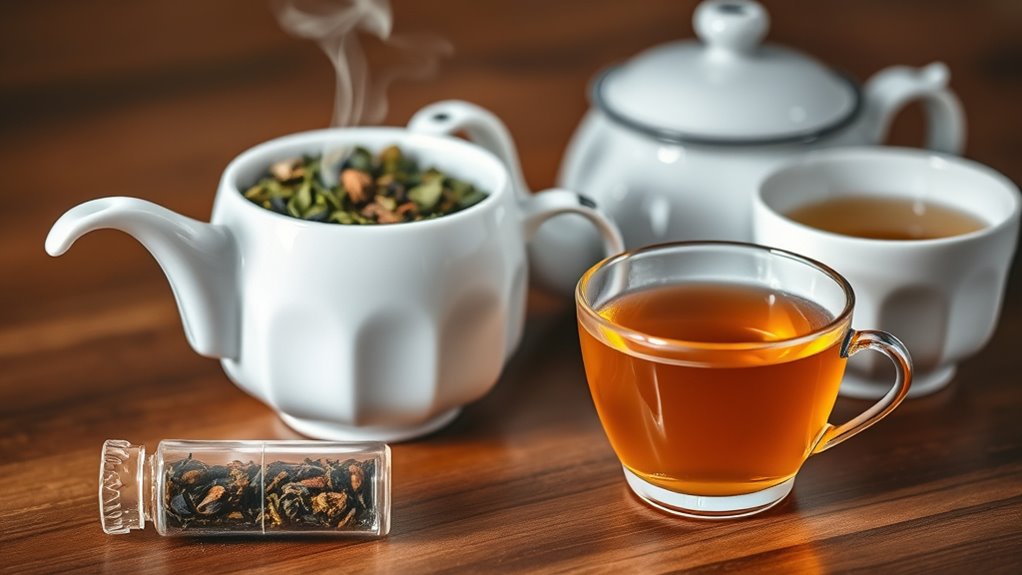
One of the most enchanting aspects of tea tasting lies in the aromatic journey that begins even before the leaves touch hot water.
Start by appreciating the dry leaf aroma; inhale deeply to capture the initial scent profile, noting its intensity and primary notes like floral or spicy hints.
Warm your teaware, add the leaves, and gently shake—now, take another whiff. You’ll likely notice evolved aromas that shift in nuance and intensity.
After infusion, explore the wet leaves. Smell for additional notes and any defects like mustiness.
Comparing these aromas to the dry leaves will reveal intriguing transformations.
Assess the Appearance of the Liquor
As you pour the freshly brewed tea, the appearance of the liquor becomes your first visual cue to its quality and character.
Look for a bright, clear infusion, signaling freshness and craftsmanship. Cloudiness? It might indicate lower quality or mishandling.
A bright, clear infusion showcases freshness and skill; cloudiness may reveal quality concerns.
Pay attention to the color: vibrant greens or yellows denote superior green teas, while premium black teas exhibit deep red or amber shades.
Observe the hue intensity; deeper colors imply oxidation level and potential freshness. Holding the cup against natural light reveals the true richness of the liquor.
Remember, consistent and lively colors reflect careful processing, while dull tones suggest aging.
Analyze the Flavor Profile
Flavor is the essence of your tea experience, and analyzing its profile elevates your tasting skills to a professional level.
Start by identifying the five basic tastes—sweet, sour, bitter, umami, and salty—that form the foundation of your tea’s character. Notice how balance among these tastes signals quality; sweetness should never be overwhelmed by astringency or bitterness.
Engage your senses by evaluating aroma, as it deeply influences flavor perception. As you sip, focus on mouthfeel: is it smooth or rough?
Consider the tea’s body and how it evolves with temperature. Finally, track the finish and aftertaste; long, clean finishes often indicate exceptional quality.
This multidimensional exploration will reveal the complex beauty of each cup.
Utilize Proper Tasting Equipment
To truly elevate your tea tasting experience, employing the right equipment is essential. Start with a professional cupping set that includes a brewing cup, lid, and small tasting cups—white porcelain enhances visual clarity and flavor perception. The serrated edge on the brewing cup filters leaves efficiently as you pour.
For precision, use a scale to measure 2.5 to 3 grams of tea per 150 ml of water, and don’t forget a timer to perfect steeping times. It’s also wise to have porcelain spoons and bamboo tongs for safety and sanitation.
A tray for your tasting cups and an instant-read thermometer will streamline your process. With the right tools, you’ll explore the complexities of tea like a true connoisseur!
Create a Suitable Tasting Environment
Creating the perfect tasting environment is essential for releasing the full potential of your tea experience.
First, make sure it’s quiet—silence enhances your ability to detect subtle flavors. Eliminate distracting scents; strong perfumes can distort aromas, so rely on neutral air to fully appreciate your tea’s fragrance.
For lighting, choose natural illumination for the clearest view of your tea’s color; avoid harsh or tinted artificial lights.
Keep the space visually calm, removing clutter and distractions, so your focus remains solely on the tasting. Comfortable seating and ample table space allow you to enjoy the session without discomfort.
Conclusion
By embracing these tips, you’re well on your way to tasting tea like a pro. Remember, “the proof of the pudding is in the eating”—so immerse yourself in those flavors and aromas with an open mind! Each cup holds a unique story, waiting for you to discover it. With practice, your palate will sharpen, and soon, you’ll not just sip tea; you’ll savor it like an expert. Happy tasting!