10 Key Differences Between Leopard Print Vs Cheetah Print
Wondering how leopard print and cheetah print differ in style and symbolism? Discover the key differences that set these iconic patterns apart!
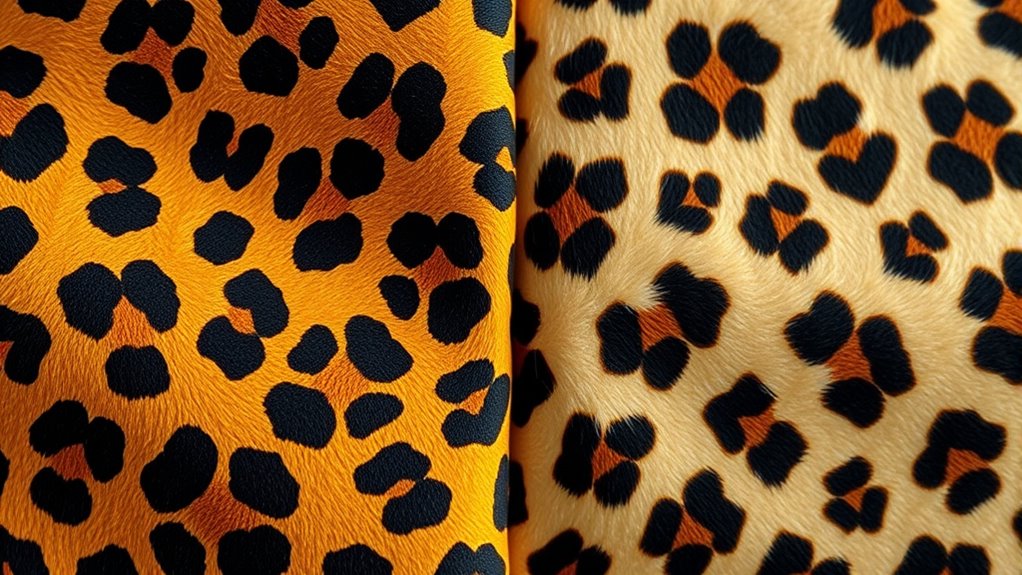
Leopard print and cheetah print have striking differences that make each stand out in fashion. Leopard’s rosettes create intricate designs, while cheetah’s uniform spots are simpler and more consistent. You’ll also notice leopard print boasts warmer hues, exuding luxury, whereas cheetah print leans towards cooler, casual tones. Their historical significance varies too, with leopard symbolizing status and elegance while cheetah reflects speed and playfulness. Keep exploring to uncover more fascinating distinctions between these iconic prints!
Spot Shape and Structure
When exploring the fascinating world of animal prints, you’ll notice that the spot shape and structure of leopards and cheetahs tell unique stories about their adaptations.
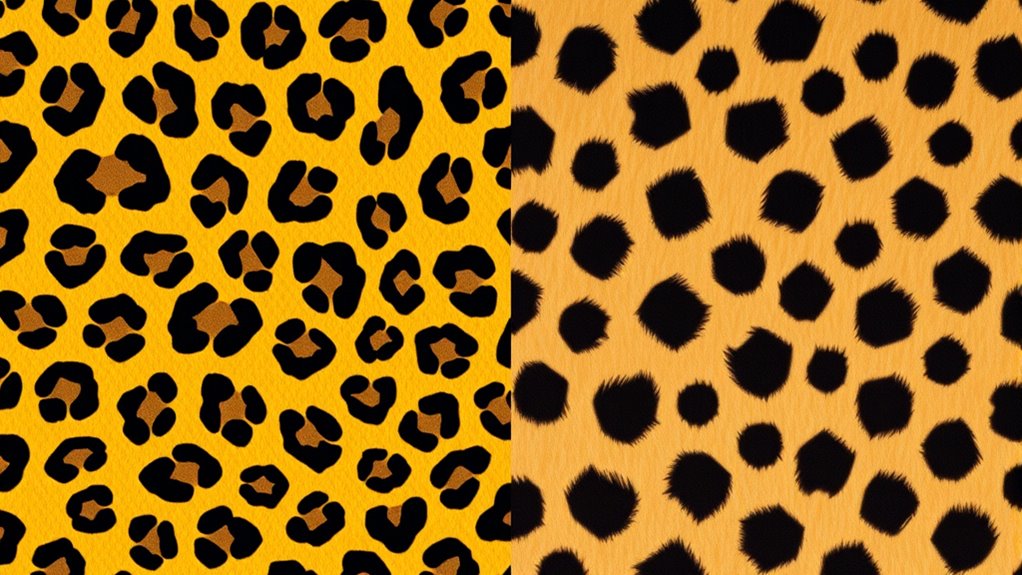
Leopard spots form beautiful clusters of dark markings in intricate rose-like patterns, with a dark outline framing tawny or lighter centers. Each rosette, comprising three to five individual speckles, creates a complex look that perfectly blends into dappled forest environments. This distinctive rosette pattern provides effective camouflage in the wild, allowing leopards to expertly ambush their prey.
In contrast, cheetah spots present as individual, solid black circles or ovals scattered uniformly on a pale golden background, resulting in a cleaner, minimalist aesthetic. While leopard rosettes display irregularity and sophistication, cheetah spots maintain consistent, streamlined shapes, showcasing how both species elegantly evolved to thrive within their habitats.
Spot Size and Density
While it might seem like just a matter of aesthetics, the differences in spot size and density between leopards and cheetahs have significant implications for their survival in the wild.
Leopards boast larger rosettes with intricate patterns, featuring dark edges and lighter centers that create a strikingly complex visual.
Leopards exhibit stunningly intricate rosettes, showcasing dark edges and lighter centers that enhance their visual complexity.
In contrast, cheetahs have small, round spots evenly scattered across their sleek coats, resembling polka dots.
This distinction in density plays a vital role; leopards’ tightly packed rosettes provide effective camouflage in shadow-filled forests, while cheetahs’ sparsely arranged spots blend seamlessly with the open grasslands.
Ultimately, these unique patterns not only define their appearance but also reflect their adaptive strategies for survival in diverse habitats.
Background Color Variation
The enchanting world of animal prints showcases a remarkable distinction in background color variation between leopard and cheetah prints.
If you’re diving into the boldness of these designs, here’s what to contemplate:
- Leopard Prints: You’ll find a rich palette ranging from golden yellow to tawny brown, often highlighted with warm undertones that enhance depth and personality.
- Cheetah Prints: In contrast, their backgrounds are typically lighter, featuring tan and light yellowish beige, creating a soft, subtle vibe.
- Fashion Variations: Leopard prints play with vibrant shades—think neon and pastel—while cheetah prints generally maintain more natural tones, keeping the focus on their trademark spots.
These differences make each print uniquely appealing in the fashion landscape!
Spot Arrangement and Pattern
As you explore the vibrant nuances of animal prints, spotting the differences in arrangement and pattern between leopards and cheetahs becomes a fascinating endeavor.
Leopards showcase stunning rosettes—clusters of black spots shaped like roses, densely packed and beautifully complex. Their spot patterns break up their outlines for effective camouflage in dense environments.
On the other hand, cheetahs flaunt simple, solid black spots that are evenly spaced across their sleek bodies, reflecting a more streamlined design perfect for open habitats.
The uniformity of their spots aids in high-speed pursuits, while the leopard’s intricate and irregular patterns enhance their ability to blend into diverse landscapes.
These differences in spot arrangement create unique visual identities, influencing your choices in animal print styles.
Visual Aesthetic and Style
Animal prints bring an enchanting energy to fashion, and when it comes to visual aesthetic and style, leopard and cheetah prints each tell a distinct story.
Consider these key differences:
Explore the distinct differences between leopard and cheetah prints to elevate your fashion game.
- Color Palette: Leopard print features warmer golden tones that evoke drama, while cheetah print showcases cooler, neutral shades that resonate with minimalist elegance.
- Visual Movement: Leopard’s irregular rosettes create dynamic patterns filled with texture, whereas cheetah’s solid spots offer a sleek, modern look.
- Luxury Appeal: Leopard conveys bold luxury and exotic allure, while cheetah emits a quiet confidence and sophistication.
Choosing between these two prints depends on the vibe you want—daring and glamorous or elegant and restrained. Each has its unique flair that enhances any outfit!
Design Application Differences
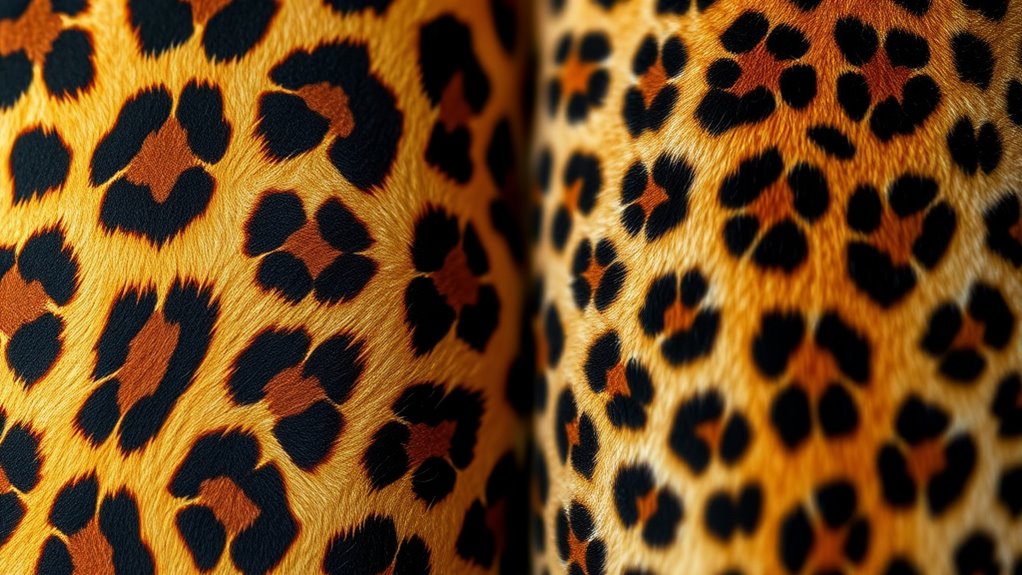
While diving into the world of design, you’ll find that leopard and cheetah prints each offer unique applications that can transform spaces and styles.
Leopard print, with its intricate rosette clusters, adds a complex charm perfect for luxe settings. You might consider using it in wall-to-wall carpeting or oversized furniture to create a bold visual statement.
In contrast, cheetah print showcases a cleaner, minimalistic vibe, ideal for modern interiors where subtlety reigns. Think throw pillows or curtains to incorporate its organized calmness.
Whether you’re aiming for eclectic elegance or a streamlined sanctuary, both prints can adapt beautifully, yet leopard’s layered allure often commands attention while cheetah quietly enhances your space.
Historical Context of Usage
Leopard print has a fascinating history that intertwines with ancient cultures and evolving social norms, making it more than just a decorative pattern. This striking design has endured through time, largely due to its rich symbolism and cultural significance. Here are a few key highlights:
Leopard print’s enduring charm stems from its deep cultural roots and evolving symbolism through history.
- Ancient Origins: In ancient Egypt, deities like Seshat wore leopard print, linking it to power and femininity.
- Art Deco Appeal: The 1920s saw modern women embracing leopard print as a chic symbol of sophistication and style, influenced by Hollywood stars.
- Cultural Evolution: Post-World War II, designers like Dior restricted its appeal, creating an aura of exclusivity while simultaneously democratizing it for broader audiences.
This pattern’s transformation reflects changing values, making leopard print a perpetual symbol of allure and status.
Popularity in Fashion Trends
In 2025, leopard print has emerged as a standout trend, engaging fashion enthusiasts and designers alike with its striking appeal and versatility.
With a whopping 170% increase in searches, it’s clear that you’re drawn to this iconic print more than ever.
Celebrities and high-profile designers like Dolce & Gabbana champion leopard print, making it a must-have for luxury and streetwear collections.
While you may notice cheetah print lingering in the background, it simply doesn’t share leopard’s magnetism.
Mixing leopard with bold patterns and neutral textures has become a favorite styling approach, and its adaptability fits perfectly with today’s youthful maximalism.
Although some critics call it “cheugy,” leopard print continues to dominate fashion like never before.
Fabric Choices for Each Print
Fashion enthusiasts adore the unique fabric choices that bring leopard and cheetah prints to life, each offering a distinct personality and feel.
When you’re choosing between these bold styles, think about the following:
- Leopard Print Fabrics: Look for luxurious options like satin and silk for evening wear, or choose stretchy spandex for comfortable casual pieces. The rosette pattern adds a daring touch to any design.
- Cheetah Print Fabrics: Opt for polished materials that lend a sophisticated vibe, perfect for corporate settings and business-casual outfits. You’ll appreciate the cleaner, more organized look of the solid spots.
- Versatility: Both prints adapt well to various fashion styles, ensuring your wardrobe stays fresh and on-trend, whether you’re dressing up or down.
Cultural Significance and Symbolism
Choosing the right fabric for leopard and cheetah prints highlights their unique character, but understanding their cultural significance and symbolism adds an extra layer of depth to your style choices.
Leopard print embodies luxury and femininity, steeped in history as a mark of power and sophistication. Worn by ancient Egyptian priestesses, it symbolizes wisdom and divine authority.
Leopard print embodies luxury and femininity, symbolizing wisdom and divine authority throughout history.
In contrast, cheetah print radiates a playful, casual vibe, often linked to speed and athleticism. Its modern interpretation focuses less on rooted symbolism and more on energetic movement.
While leopard print exudes a sense of untamed elegance, cheetah print appeals to those embracing a spirited, laid-back aesthetic.
Choose wisely, as each print tells a distinct story through your fashion statement.
Conclusion
In conclusion, while both leopard and cheetah prints can elevate your style, understanding their unique differences can help you choose the one that truly resonates with you. Did you know that leopard print has trended in the fashion world for over 100 years, appearing on everything from high-end catwalks to casual streetwear? As you explore these prints, consider how their distinct characteristics can enhance your wardrobe and express your personality in a bold, mesmerizing way.