How to Measure 8 Ounces of Water Without a Measuring Cup
Mysteriously measure 8 ounces of water without a cup, using everyday items or a digital scale for accuracy—discover how inside!

You can measure 8 ounces of water without a measuring cup by using a digital kitchen scale. Just place a bowl on the scale, zero it out, and weigh 237 grams of water. If you don’t have a scale, use common household items. Many drinking glasses or coffee mugs hold around 8 ounces when full. Just fill them to the brim for accuracy. Discover more methods to guarantee precise measurements for all your cooking and baking needs.
Measuring 8 ounces of water is a straightforward task that can make a big difference in your cooking and baking accuracy. If you don’t have a measuring cup on hand, you can still achieve this measurement by utilizing alternatives available in your kitchen. One of the most effective methods involves using a digital kitchen scale. Digital scales give you a precise measurement; they’re superior to traditional cups, which can yield inconsistent results based on how you fill them.
To measure 8 ounces with a kitchen scale, place a bowl on the scale and zero it out. This way, you can add the water directly to the bowl, and the scale will display the weight. Since 8 fluid ounces of water is approximately 237 grams, you want to aim for that weight. This method eliminates inaccuracies caused by variations in measuring cups. It also saves you time—no need to worry about leveling off or tampering with your measuring cup technique, which can often lead to discrepancies of up to 2 tablespoons. Weighing ingredients ensures consistent results in baking with accurate measurements.
To accurately measure 8 ounces of water, use a kitchen scale for precise results and eliminate measuring errors.
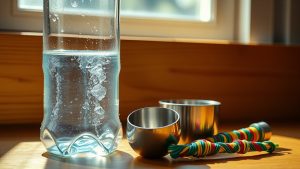
If you don’t have a kitchen scale, a few common household items can help you approximate 8 ounces. Many standard drinking glasses hold around 8 fluid ounces when filled to capacity, although it’s crucial to fill them to the brim for an accurate measure. Also, coffee mugs can be helpful; many of them contain approximately 8 ounces. Just check the capacity of the item you’re using. You might also have small bowls or containers that you know the capacity of—these can serve as reference points too.
Be cautious, though. When using volumetric measuring methods, the technique matters. Pouring water into a measuring cup can create errors due to splashing, and reading the meniscus correctly is important to avoid miscalculations. Temperature variations can also affect the water density slightly, which could lead to further miscalculations if you’re not careful.
Converting measurements between metric and imperial systems can also be handy, especially if you’re working with various recipes. For instance, knowing that 8 ounces equals 236.6 milliliters allows you to switch to metric measurements if your tools lean in that direction. Keeping conversion charts posted in your kitchen can help minimize errors and provide convenience.
Consistency is key. Establishing a particular method of measurement helps maintain accuracy throughout your recipe preparation. Using the same technique ensures you achieve predictable cooking and baking results every time. If you’re working with multiple ingredients, following a standard measurement approach prevents compounding errors that can ruin your dish.
Conclusion
Measuring 8 ounces of water without a cup might seem tricky, but it’s easier than you think. Whether you use a standard water bottle, a kitchen scale, or a common kitchen item, you’ve got options. While it’s tempting to rely solely on gadgets for precision, your creativity can yield just as accurate a measurement. So, embrace resourcefulness without dismissing reliability. With a little ingenuity, you can confidently measure your water and thrive in your culinary adventures!